

Everyone knows the classic Hallmark film storyline, with small-town charm, emotional misunderstandings, main characters taking a break from their stressful jobs in big cities and traditional happy endings. Yet, Hallmark Channel has also recently tried to promote more diversity within its audiences through the recent launch of Hallmark en Español, a series of Spanish-dubbed movies.
The channel was released in May 2024 across various streaming platforms. Hallmark movies are not new to Hispanic audiences, since Hallmark has been selling their movies to Latin American networks since the early 2000s. However, the goal of Hallmark en Español is to increase accessibility to Spanish-speaking audiences.
Upper School French Teacher Aaron Dean says he encourages his students to consume media in the language they are learning in order to improve their fluency and comprehension. Similarly, students taking a Spanish class at Masters are encouraged to watch movies in Spanish, and now have the opportunity to watch Hallmark en Español to improve their language proficiency.
“A lot of times, if you watch a movie that you have already seen in a different language, it helps you kind of fill in gaps because [you] know [what] lines they’re saying in English, [and now] you hear it in Spanish or whatever the language, and you’re able to kind of put the pieces together,” Dean said.
He continued, “With movies [like] Hallmark movies, a lot of the cues are visual, and so it doesn’t necessarily take expert level proficiency to understand what’s going on. You can gain meaning through what’s happening on the screen. It’s good for students, because they’re able to hear what’s going on, and then also see it.”
Upper School Spanish Teacher Allison Eggleston also believes more exposure to Spanish media improves students’ fluency. She said she was once told to picture learning a language as filling a cup of water. When an individual reads or hears someone speak or sing in Spanish, they are ‘filling their cup.’
“When people are first learning — like when the cup isn’t full — it’s not always easy to produce the language, but the more you keep on filling up your cup, when it gets full and gets up to the very top, that’s when language starts to spill out and you feel more comfortable speaking. So, essentially I think that anything that gets a learner more easily able to engage with or expose themselves to the language is always a good thing.”
In addition, the launch of Hallmark en Español has been viewed as beneficial because it also has the potential to help connect younger and older Latino generations.
Laura Peralta ‘27, a member of the affinity group Latinas Divinas and whose family comes from the Dominican Republic, said, “There are so many generations of people who were not born in the country that their family is from, and I feel like that [Hallmark en Español] could help people stay connected to their culture if they didn’t learn Spanish as a child. [Now] they could learn. It’s very important to preserve your roots.”
Although Hallmark movies are known for focusing on themes like family, friendship and love that can relate to all audiences, including Latino individuals, the movies do lack aspects of a traditional Christmas for Hispanic people.
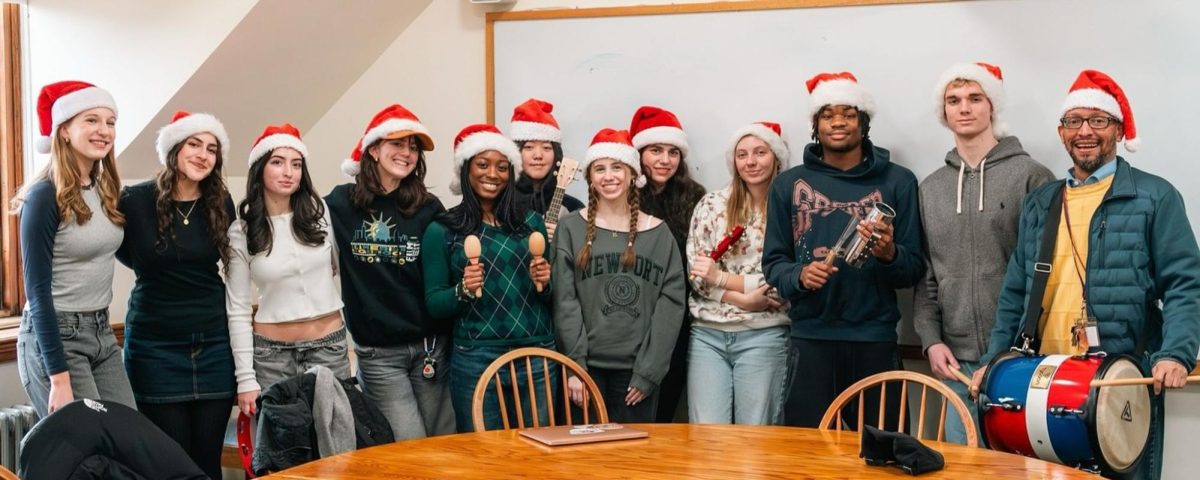
Latin Americans typically focus their celebrations on the night before Christmas, named Nochebuena. During Nochebuena or other late nights during the Christmas season, many individuals in Latin America also practice parrandas, which students in the Advanced Topics in Spanish Language and Culture class at Masters are learning about and plan to bring to other classes before winter break.
Peralta said she feels movies that are supposed to appeal to Hispanic audiences should actually try to incorporate the holiday customs of those communities, like the typical large celebrations during Nochebuena.
“I feel like Hispanic Christmas is different from American Christmas, and it’s better, honestly. We celebrate it the night before and [have] all the traditions we do,” she said.
Despite the universality of the films, Hallmark movies have also been criticized for their lack of diversity in casting. According to the Hollywood Reporter, in 2019, 20 out of 24 of the original holiday movies of the season had white main characters, creating a lack of proper representation for people of color in the films. Samba.tv reported that in 2022, 23% of Hallmark’s films included at least one non-white lead, even though 41% of people in the U.S. identify with an ethnicity other than white.
Dean said he suggests that Hallmark steers away from the typical small-town America and nuclear family storylines and brainstorm new ways to connect to their diverse audiences, especially for younger individuals who enjoy watching Hallmark movies and deserve representation in the media they consume.
Dean said, “Having more representation, I think, just makes [the Spanish media] more accessible to not just to one particular group, but to many people, because a lot of times there’s multiple characters [and opportunities] for there to be representation. Instead of making Hallmark this traditional middle American family, change it completely and have a mix [of individuals]. Having a mix allows for different students from different backgrounds to point to one character and relate, and then by that they’re able to actually consume [the media better].”
In addition to a lack of inclusive casting, despite Hallmark Channel’s attempt to reach Hispanic audiences through the launch of Hallmark en Español, the channel has not produced movies originally filmed in Spanish. Eggleston said she believes original Hallmark Spanish films would be widely received by the public.
“I think that what we’re seeing pop culture wise [right now] is that there’s a huge appetite and market for Spanish language media, and not just amongst Hispanic Americans, but from everyone. If we look at the success and the popularity of artists like Bad Bunny, who’s gonna be playing at the super bowl, [Spanish media] is something that people really enjoy.”
Peralta said she believes it is especially important for some Hallmark movies to be filmed in Spanish as Hallmark is already a large part of mainstream media. “This is a country with such a high population of Hispanic people, [so movies in Spanish] shouldn’t be closed off. It should be accessible to everyone in the country.”
Anti-immigration videos targeting Hispanic individuals have circulated online, originally being posted by the White House TikTok account, and facing a lot of backlash by social media users commenting on the clips. Eggleston said she believes it is especially important to have the Hallmark en Español channel and other films representing the Latino community during this politically hostile time.
“I think [the launch of this channel] comes at a really crucial time because unfortunately, in the politics in this country, we’re seeing many people across the country be attacked for their perceived ‘otherness.’ We’re hearing from the [Trump] administration that, essentially, Latinos don’t belong, that they’re being ‘othered.’ They’re being called dangerous, lazy people who are just taking from society, when the reality is that Hispanic people, like many other immigrants, bring and give so much to our society.”
She continued, “People might think of Hallmark [en Español] and say, ‘oh, they just do these sweet little Christmas movies,’ but I think [the channel’s launch] is actually kind of a really bright and meaningful choice because it says that [Latinos] are a part of this community. When you have art or music that’s sort of made to represent you, it’s validation.”