

Here’s some food for thought for the political media junkies this holiday season: who here remembers the war on Christmas?
It is easy to forget now, when grifting and rage-baiting off topics far more lurid and far more offensive has become the norm. But once upon a time, this talking point – the idea that American liberals were hell-bent on “taking Christ out of Christmas” – was among the crowning jewels of the entire right-wing culture-war industry. In an age before trans issues, before “woke” and “DEI,” perhaps no other cog in the rage-machine, save for gay marriage, loomed so large.
The War on Christmas was, for some time in the early-to-mid-2010s, the golden standard; the definitive blueprint for how to manufacture a cultural outrage. Since its earliest days on The O’Reilly Factor it was the golden goose that made FOX their fortune — the favorite child in a family of imaginary ghosts. So why in recent years have we stopped hearing so much
about it?
According to a YouGov poll, belief in the existence of the War on Christmas declined overall in America by thirteen points from 2022 to 2024 – from 39% to 26%. Most shockingly of all, it did so even among Republicans: not just by a little, but a staggering 23 points from 59% to 36%.
This is not just on par with the rest of the country, but substantially more: perhaps as the mainstream right turns more and more extreme, it seems old talking points from the neoconservative era no longer sate their unholy appetite. But maybe the reason is slightly deeper than conservatives tiring of their own rhetoric.
Talking points are not just cynical power-schemes: they also encapsulate, to some extent, a faction’s political psychology. And the War on Christmas particularly has always had a deeper meaning: it was a vehicle to externalize anxieties about the waning social status of conservative Christianity in a polite-society fashion. It allowed the right to lament the loss of cultural capital without being branded as hicks or bigots.
Nowadays, though, there is clearly no need for that mask. If a right-wing influencer believes Christians or white Americans or whatever other group is being marginalized, they’ll tell you outright, and in no shortage of vulgar detail. We can also say, then, that the War on Christmas was a manifestation of an impulse which has since found other, more base outlets.
Of course, it only found those outlets at the end of the long memetic trail that earlier culture-war talking points ironically paved. No matter how disparate they are, we would have never arrived at Tucker Carlson and Nick Fuentes had we not started with Bill O’Reilly.
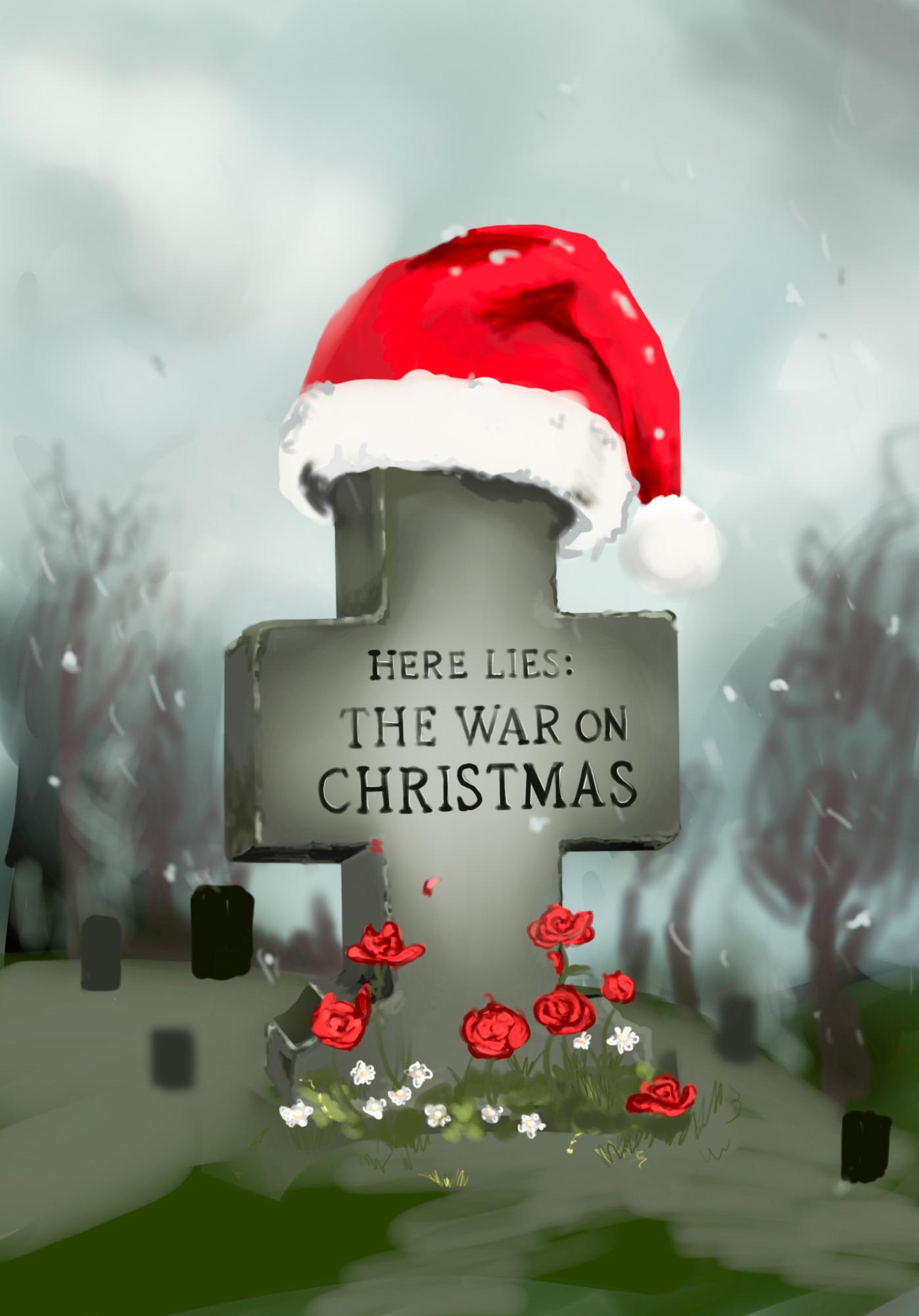
I doubt many obituaries will be written for the War on Christmas. But it has served its purpose, and now largely fades into obscurity. On the headstone, however, it will warn:
Sometimes a conspiracy grows so bloated, so all-consuming, that it consumes itself. Sometimes we create the monsters which become our own doom.