


The unexpected rise to popularity of the TV show “Heated Rivalry” seems to be a step towards the acceptance of queer media within the mainstream. However, analyzing the primary audience of the show reveals a social phenomenon: young women are particularly drawn to media about relationships between gay men.
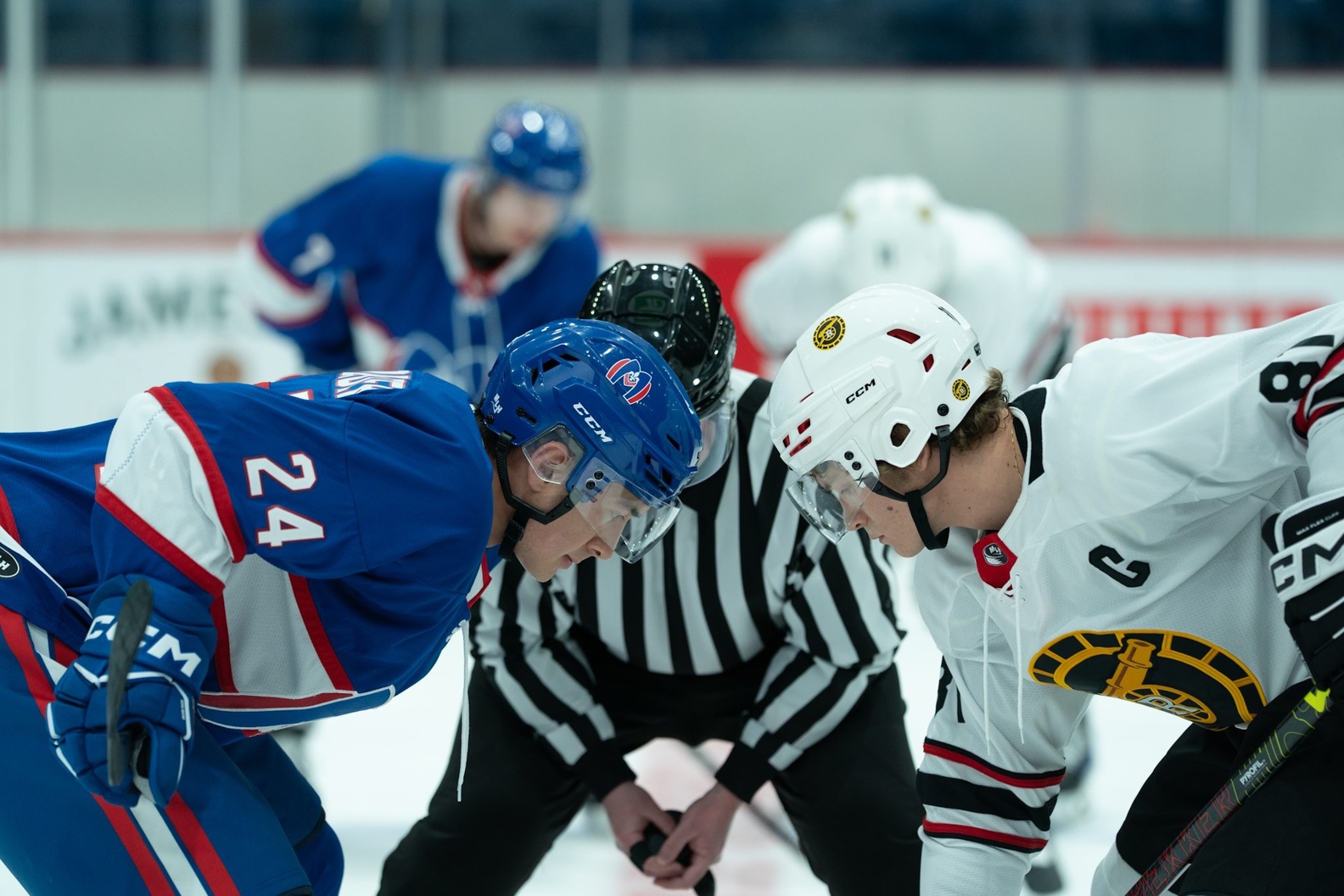
The show “Heated Rivalry” is a romance story, inspired by the “Game Changers” novel series by Rachel Reid, about two top hockey players who have an intense decade-long secret relationship and public rivalry. The show had a very rapid and sudden rise to popularity. When it first premiered on HBO Max on Nov. 28, 2025, the show only accumulated around 30 million streaming minutes, but by the time the final episode was released on Dec. 26, 2025, it had more than 324 million streaming minutes.
Senior Jovey Molina said, “I think I was kind of surprised [when] it blew up. I think I’m more surprised at how quickly it blew up, rather than the fact that it got famous itself.”
This explosion in attention has attracted an enormous fan base, nearly two-thirds of which is dominated by straight women. This occurrence is a pattern as books, movies and other shows that center around a romance between two men, such as “Red, White, & Royal Blue” and “Heartstopper,” have a robust audience of straight women.
But why aren’t there more queer male fans of these shows? And why isn’t there this amount of attention on romance media surrounding two women?
One explanation may be that the casting of two attractive male actors – like “Heated Rivalry’s” Connor Storrie and Hudson Williams – draws in lots of straight women.
However, the reasoning goes much further than that and is partly due to the representation of women in romance media. Lots of straight romance stories involve an unequal power dynamic. The woman is sometimes written with harmful stereotypes, like being a damsel in distress, and the man usually does not have any emotional development or vulnerability. However, gay romance sidesteps that entirely by taking out the opportunity for this uncomfortable trope.
When the two main characters are men, and while gay relationship stereotypes certainly exist, writers cannot rely on overused gender roles for characterization, meaning the characters are more likely to have proper emotional development.
Junior Class Dean and fan of the show Mariah Peña said, “There’s something about watching men on screen be vulnerable and intimate in a way that goes against this gender norm that’s been, I think, fed to us. That masculinity doesn’t have to be emotionally avoidant.”
This is especially true when it comes to explicit shows, which “Heated Rivalry” falls under. The portrayal of women in explicit scenes has always been sensitive at times as they can sometimes feel objectifying instead of an accurate portrayal of intimacy.
“Because often women are objectified or feel degraded, and it’s hard, even if the people on screen who have sexual chemistry are two women, then you’re thinking about, ‘Who wrote this scene, who directed it? It was a man. Is this from a male gaze? And how realistic is this?,’” Peña said.
Of course, explicit scenes with men should also be handled carefully to ensure that it doesn’t feel exploitative, but many viewers say that the intimate scenes in “Heated Rivalry” are part of the appeal as it doesn’t shy away from accurately portraying adult relationships.
“I think it is good that the show is attempting to normalize [explicitness] in queer relationships even if it is very sexually explicit and heavy handed, at least it is staying true to what most people’s adult lives do look like,” senior Ayalah Spratt said.
As “Heated Rivalry” breaks through previous barriers set upon queer media, it also may set a precedent for how these shows will be produced in the future. It certainly shows the possibilities in male centered gay shows, but that doesn’t mean that it necessarily sets the stage for all queer media.
Many shows centering around a romantic relationship between two women haven’t received the same treatment that the male centered shows have. In fact, shows featuring a lesbian main couple like Netflix’s “First Kill,” which had 97 million viewing hours while it was in Netflix’s top ten, was canceled after only one season. In comparison, “Heartstopper,” a story about a male couple, only had 53 million viewing hours while in the top ten, yet had three seasons.
Molina said, “Historically, I feel like there’s been a difference between women-love-women shows and men-love-men shows…[I] feel like men’s relationships together are always portrayed in a more positive, endearing tone, compared to women who love women. I think that’s why most people gravitate towards that kind of content.”
As bigger companies see the potential in producing gay shows, it’s important to consider whether they will go down the route of catering to straight women, which could take away from equal queer representation.
However, disregarding possible future impacts, the show is considered by many as a large step forward for the queer community through its representation and popularity.
“I think the queer community has been looking to see itself represented on TV for a long time,” Peña said. “I think what the community needed was just to see a very relatable depiction of what it is to be to fall in love or to have attraction in a space that you can’t feel like you can’t. So, yeah, I think it’s a massive win for the queer community.”
Additionally, it is undeniable that “Heated Rivalry” has created an opportunity for conversations around queer representation.
“I think this show will be a great pathway forward, as people have seen how successful it is,” Spratt said. “I think this will really be a catalyst, since it’s become so successful and that people know that they can make it big by making projects about these topics.”