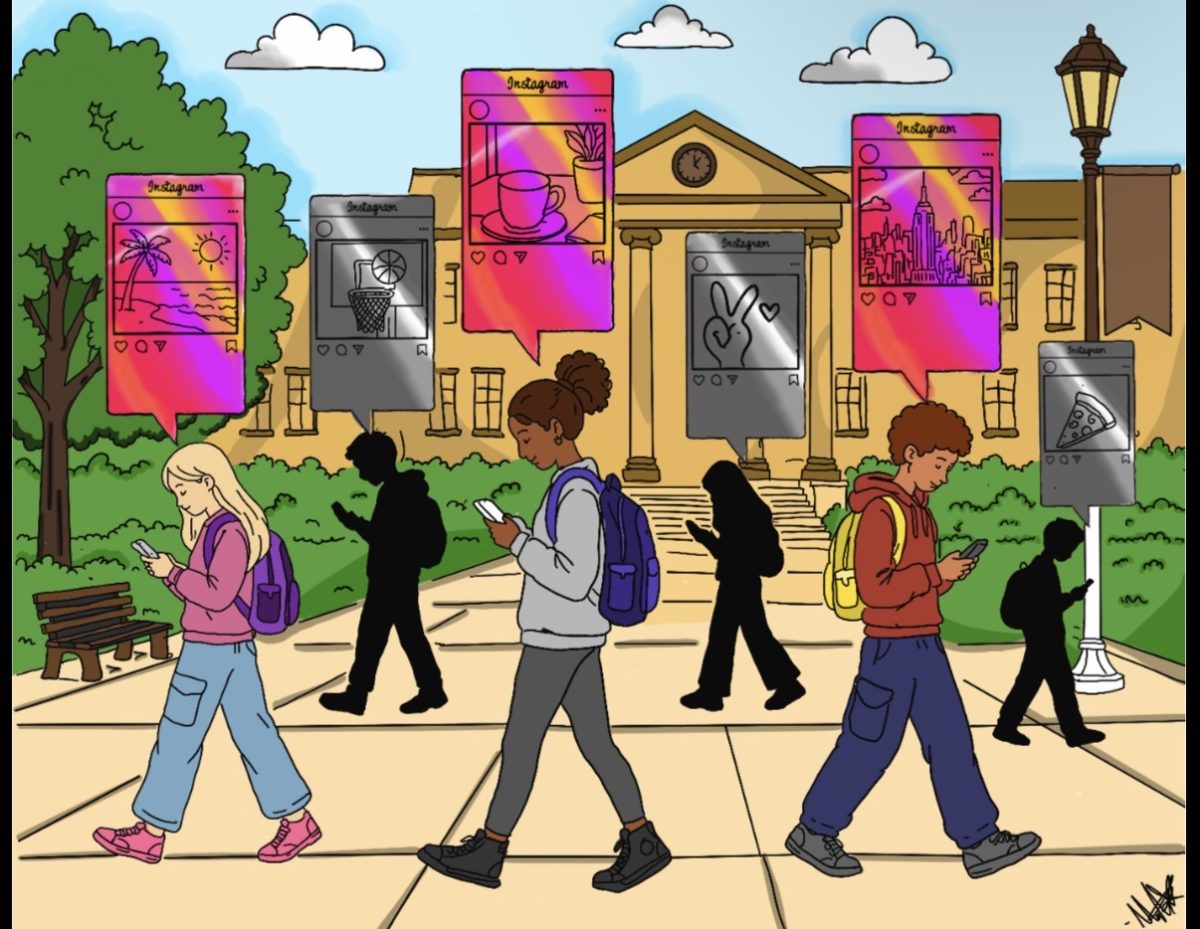



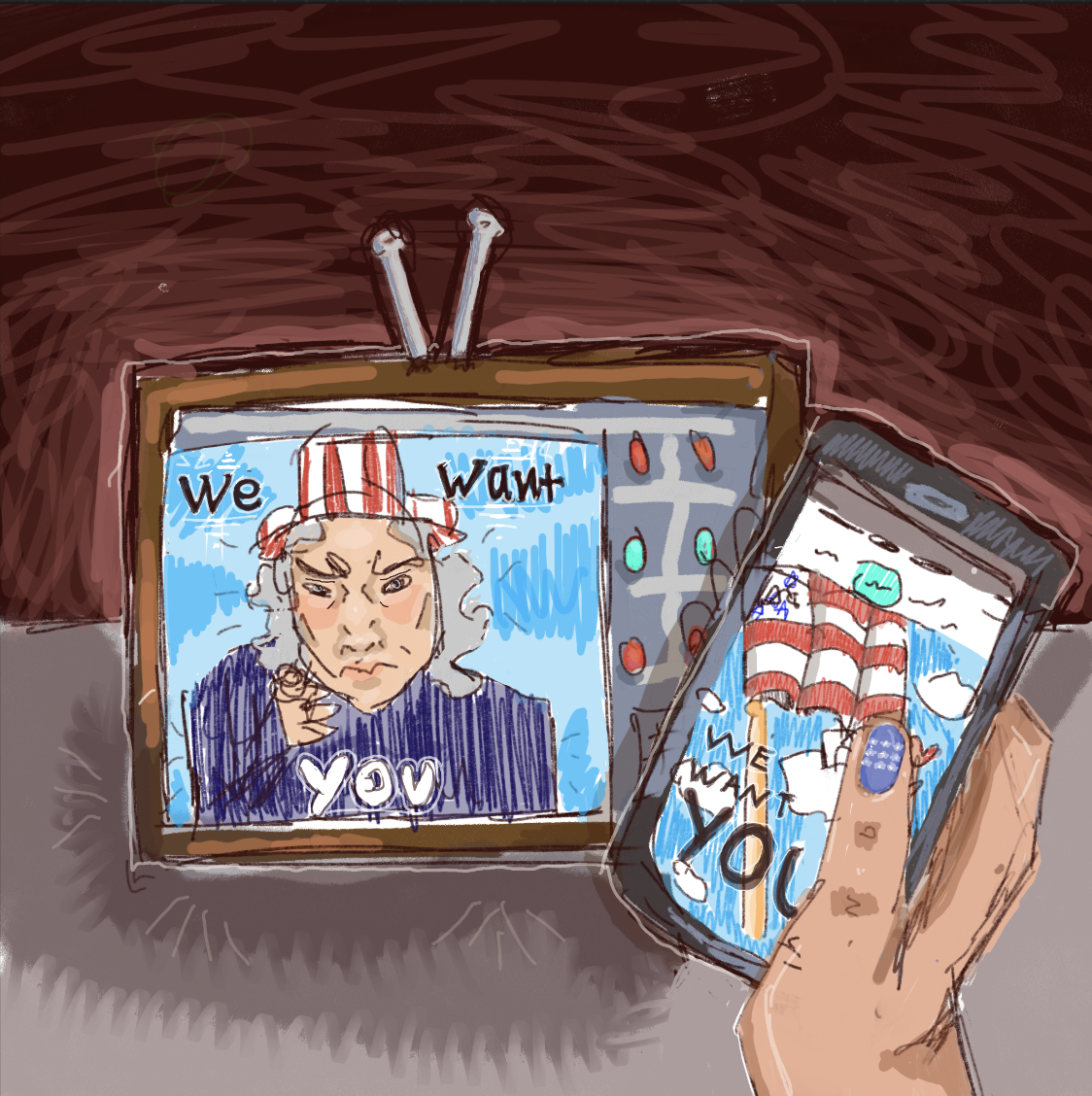
When students scroll through Tiktok, they can encounter topics spanning from funny stories, cool cooking recipes, makeup tutorials and movie clips all the way to emotional footage of wars or protests happening in major cities. Current events constantly infiltrate social media algorithms, shaped by the biased perspective of the individual relaying the information. Although Americans no longer have Uncle Sam posters hanging outside retail stores, digital propaganda still infiltrates daily life.
While propaganda is usually used by governments to push certain narratives, messaging has also been used by individuals in opposition to the government.
For example, when trying to increase support for the revolution against Great Britain, Paul Revere famously depicted the Boston Massacre as a conflict between angry British soldiers and innocent Boston crowds in an engraving in 1770. Revere’s engraving “The Bloody Massacre in King-Street” shaped public perception of the event by portraying the British soldiers as the main aggressors, even though in reality, the colonists attacked first.
While Revere depicted the government’s revolutionary messaging through physical materials, the current White House administration uses digital methods for propaganda today. In December of 2025, the White House TikTok social media page posted a joking video showing a series of arrests by U.S. Immigration and Customs Enforcement (ICE) agents. In the video, “Jingle Bells” by Frank Sinatra played while the chains of the arrested individuals clanked along to the song. Clips of President Donald Trump’s speeches played in the background as well, such as, “Back to the places from which they came,” and “a free flight out of our country.”
From the Trump administration’s perspective, as explained on the White House website, the role of ICE is to remove criminal illegal immigrants to promote public safety. The White House social media pages consistently show criminal immigrants in their media to emphasize the productiveness of ICE for protecting American citizens from danger. However, from other individuals’ perspectives, ICE perpetuates racial profiling. Some people have reported being stopped and interrogated by ICE because of their appearance, inciting fear in communities.
In retaliation to the White House videos and ICE arrests, people have pushed back by sharing anti-ICE sentiment. At the 2026 Grammys on Feb. 1, Puerto Rican singer and rapper Bad Bunny expressed his disapproval against ICE during his speech for his Música Urbána album. Other artists, such as Billie Eilish, Olivia Dean and Trevor Noah, made comments in support of protecting immigrants on broadcast television.
The anti-ICE opinion promoted at the Grammys is an example of counter-messaging that challenges the political messaging of the White House. Historically, the government’s strategic messaging was spread through posters, radio and television.
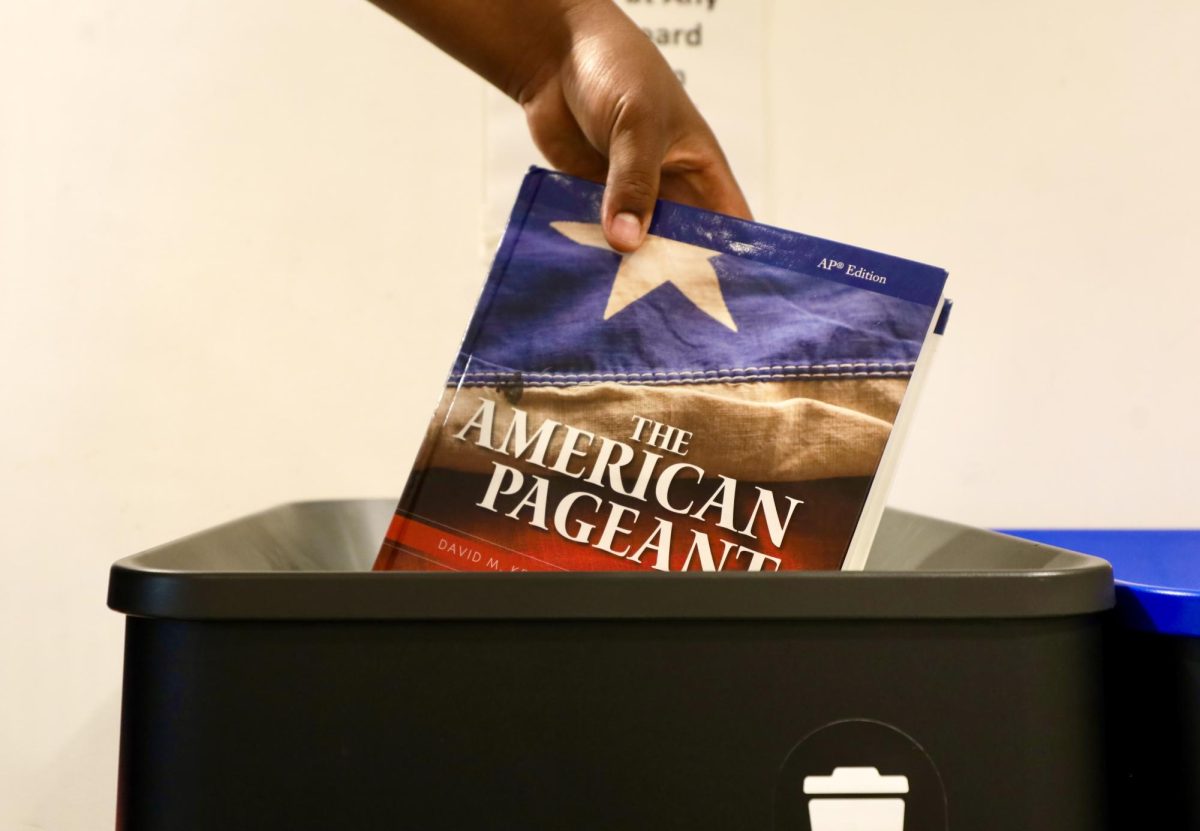
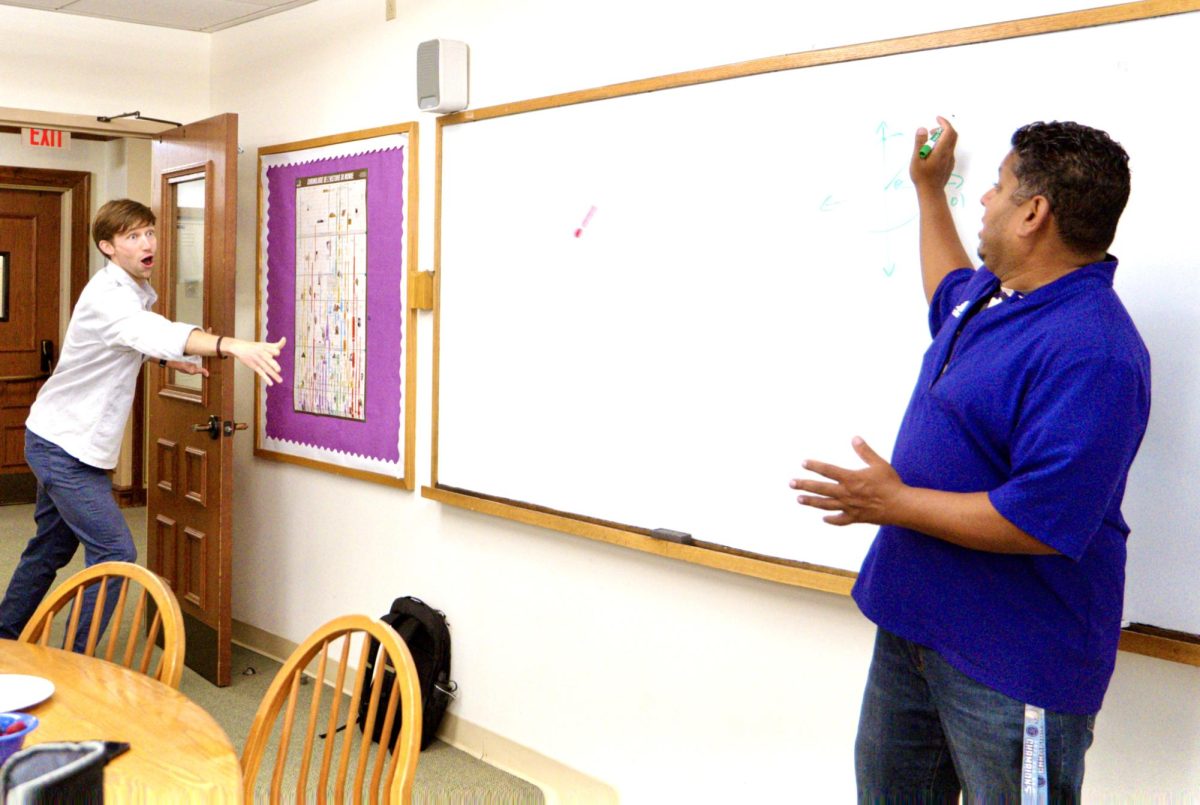
AP American History and political science teacher Colleen Roche teaches about this historical propaganda in her American history classes, such as the propaganda spread after the Boston Massacre or during the Vietnam War. However, she pointed out that the information coming from the White House today is no longer just biased, but plainly incorrect.
“What we’re seeing now is just flat out false. It’s not just with a biased lens. I don’t think we’ve seen that from the White House to the same degree in the past because we’re seeing [disinformation now] on basically a daily basis,” she said.
Blatant disinformation from the White House can be found on their social media pages. On Jan. 22, the New York Times confirmed that the White House had altered a photo of a protester, which they posted on social media, using Artificial Intelligence to depict her as a crying hysterical individual. In reality, the demonstrator, Nekima Levy Armstrong, was calm and collected when she was arrested for protesting at a church to advocate for immigrants’ right to worship without worrying about arrest.
Other than the altered photo of Armstrong, Roche said there are more examples of the White House promoting falsehoods.
“[It’s] very troubling because you want to be able to believe your government. Is [the White House website] an unbiased source? Of course not. Every administration, Biden, Obama, Bush, every president has wanted to tweak your understanding of their actions in a positive light, but distorting the truth and deliberately spreading disinformation is a problem,” she said.
As disinformation becomes easier to spread due to the freedom for any individual to post incorrect information, young individuals must learn to navigate the digital propaganda.
In APUSH classes, students learn to analyze primary sources using a method called SOAPStone. According to the acronym, students must identify the speaker, occasion, audience, purpose, subject and tone of the source. Although SOAPStone is used mainly for primary sources, APUSH student Chloe Roh ‘27 said she believes the method can be applied to the news individuals encounter today.
She said, “I feel [SOAPStone] has always been an undercurrent of history lessons. Ms. Roche always encourages us to think about the why [of a news source]. I like how she trains us, not just as students, but as historians.”
In her political science class, Roche teaches her students other ways to analyze a news source. She recommends individuals read about the same event from politically opposite news outlets, like the New York Times and Wall Street Journal, to fully examine the news event.
While mainstream news sources are helpful for analyzing news, Roche strongly warns against individuals getting their information from social media.
She said, “Mainstream resources are much more reliable because they train journalists and have a code of ethics that they have to adhere to. A mainstream news organization is not going to peddle falsehoods. Social media is ripe for falsehoods. I would no more get my news from Facebook, than I would allow a toddler to make me dinner.”
Despite the dangers of receiving news from social media, the circulation of news online persists. Roh said she has encountered breaking news on YouTube, which she has noticed can contain biased information at times.
For students, social media influences perspectives through the constant outpouring of biased information, and in some cases, completely false narratives. However, Roh recognizes that social media is not necessarily only used to spread harmful propaganda, but also used to unite individuals to a common cause.
Roh said, “There is strength that comes with [social media], too, in that, you can use those platforms to spread awareness, to raise your voice or use it for a greater good. Especially with all the protests happening in America right now, I feel like with those protests being broadcast on national or local news, [you see] the power of the people coming together for a single purpose to make waves within the community.”