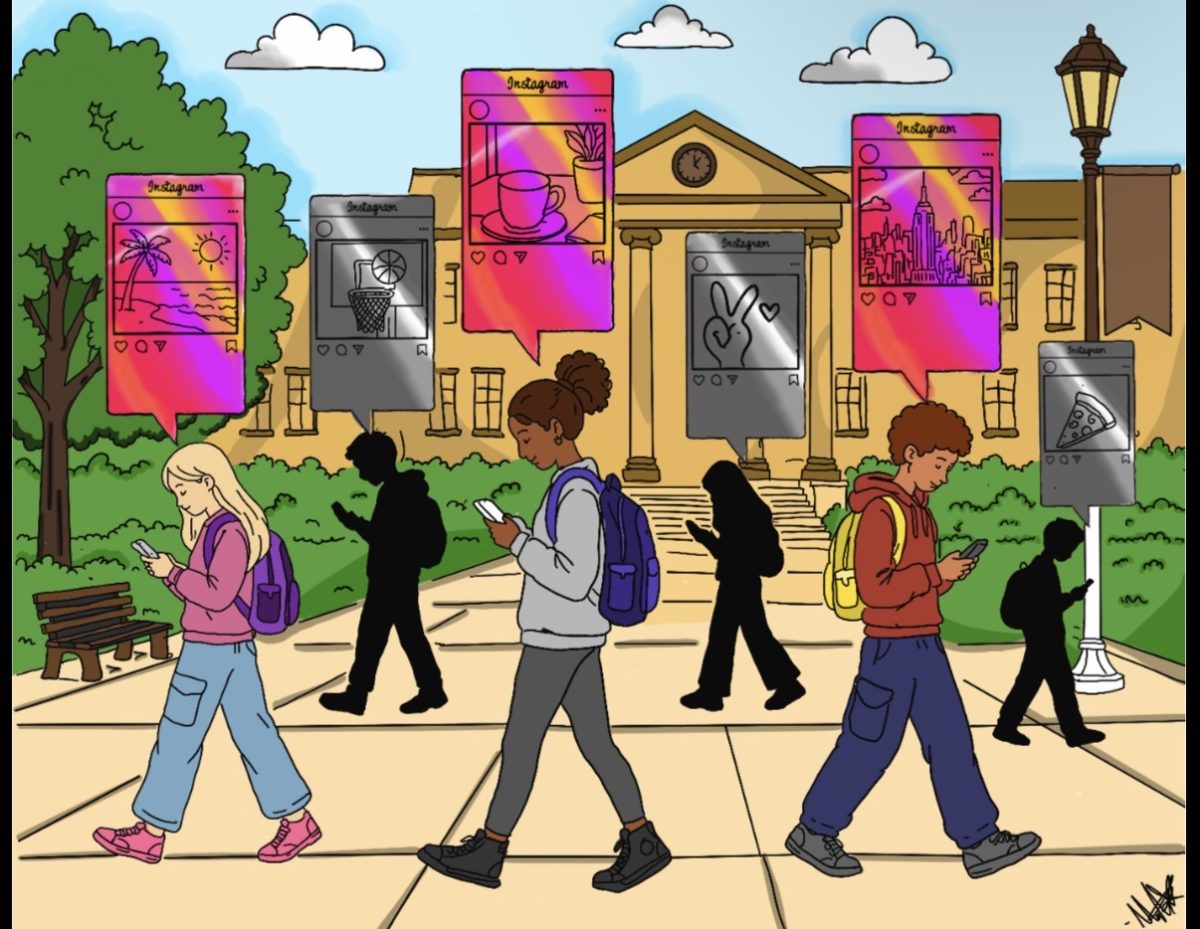




The cruelest messages didn’t come from a stranger. They came from a mother, disguised behind an unknown number. Netflix’s “Unknown Number: The High School Catfish” pulls viewers into a dark story showing how cyberbullying can take root in unexpected places and just how easily it can spiral.
Directed by Skye Borgman, the film follows the real-world case of Lauryn Licari and her then-boyfriend, Owen – teenagers from suburban Michigan whose phones began buzzing with harassing texts in 2020 lasting over 15 months. Investigators eventually revealed the messages were sent by Lauryn’s mother, who used spoofing apps to conceal her identity, shocking the teens and the wider community.
Lauryn and Owen’s story is compelling for how familiar its mechanics are to students. Nearly half of American teens, 46%, say they’ve experienced some form of cyberbullying, according to a 2022 Pew Research Center survey. Offensive name-calling, rumor-spreading and the receipt of explicit images are among the most common forms.
Upper School Associate Dean of Health and Wellness Jodie Goldberg discussed how difficult managing cyberbullying is. She said, “It’s not necessarily happening in front of a teacher or a parent. Sometimes adults don’t even know what’s going on if we don’t have access to your accounts.”
The film landed close to home for many students. Senior Bella Henriquez said she was struck by how convincing the accused appeared on screen before the reveal. “It made me think about how [the bully] could be anybody,” she said. “You can’t always trust what people say in-person.”
Henriquez also reflected on witnessing cyberbullying firsthand. “It was hard to watch because you could tell the person was really hurt. They ended up deleting a lot of their online content, which was upsetting to see because the bully stripped their confidence.”
In the film, Owen’s experience demonstrates how cyberbullying can ruin friendships. At one point, his closest friend Khloe was suspected of sending the messages, creating tension in their circle. The documentary portrays the stress of being targeted while questioning whether friends can be trusted.
Goldberg emphasized how bystanders shouldn’t feel pressured to stay silent. “I know few people who have sat silently and haven’t felt a certain sense of guilt. It’s going to be uncomfortable either way. You might as well be on the side of discomfort helping someone else,” she said.
Unknown Number also highlights how institutions can falter when confronted with reports of bullying and harassment. Interviews with school officials featured hesitation and missteps leaving the victims more vulnerable. Henriquez contrasted that with the environment of Masters. She said, “At Masters, I think people would turn to the administration more quickly. Our school is very anti-bullying.”
Masters has taken steps to stimulate conversations surrounding cyberbullying. Goldberg said, “I think as much as we can, we try to talk about it in classes and have open and honest conversations. I do think removing phones is a good start. We can’t stop what happens after hours, but I do think when we are made aware of it, accountability is put into place.”