


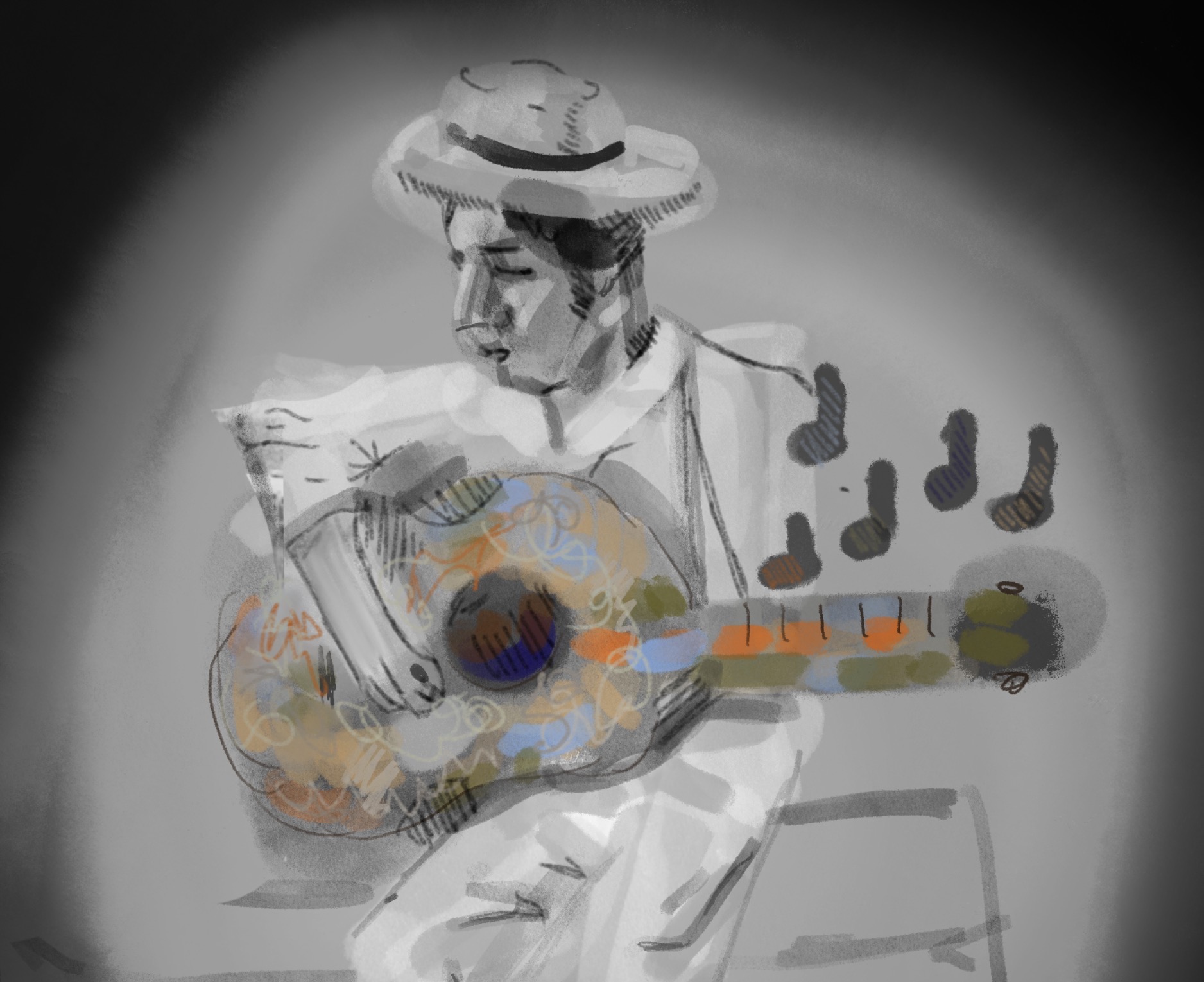

Just this week, I have begun brainstorming for the hardest photography assignment I’ve ever received: a self-portrait. How could I express my entire being in a single piece of art? How am I perceived, and do I wish to challenge that or embrace it? When creating a work of art so vulnerable and personal, it is impossible not to think about its reception.
“What is this s***?” was the first line in a scathing Rolling Stone review of Bob Dylan’s 1970 album Self-Portrait. Critics and fans alike described it as “a mess” and “lazy.” The album interrupted Dylan’s momentum, brought about by his mid-sixties run of fantastic albums, including Highway 61 Revisited and Blonde on Blonde.
Fans disliked the tired covers and corresponding lack of new tracks, with two-thirds of the album being adaptations of existing songs. The album subverted the expectations of those who considered him to be the voice of the generation, the poet, the “prophet” of the “Woodstock Nation.” It was a complete disappointment.
But it was intentional. According to a 1984 interview, prior to releasing the album, Dylan felt suffocated by his heightened role in music. He couldn’t function as a normal individual and feared disappointing his audience, saying, “I wish these people would just forget about me.” The album wasn’t purposefully crafted to be “bad,” per se, but to intentionally remove the spotlight from him, allowing him to regroup.
Self-Portrait holds a special place in my heart as the first Bob Dylan album I ever listened to in full, believe it or not. I was introduced to what I see as the album’s strongest track, “Wigwam,” from the Wes Anderson film The Royal Tenenbaums. It is warm, comforting, and has no meaning, its lyrics only made up of “la,” “da” and “dis.” The song is a piece of “campfire music” that reflects the low-stakes feel of the album as a whole, and it remains one of my favorite Dylan tracks even as I listen to more.
But the wider reaction to Self-Portrait, particularly at the time it was released, reflects the difficulties artists face when attempting to redefine themselves. Some artists build their careers around their eras or personas — think of Taylor Swift or Tyler, the Creator — but for those who only assume the identity that is assigned to them, it is much more difficult to break free.
Self-Portrait provides interesting insight into artist redefinition and individual identity generally. Even out of the public eye, many still choose to reinvent themselves and start anew. I have begun to appreciate the bravery to let go of expectations, even if doing so risks your work being labeled “the album that ruined rock and roll.”