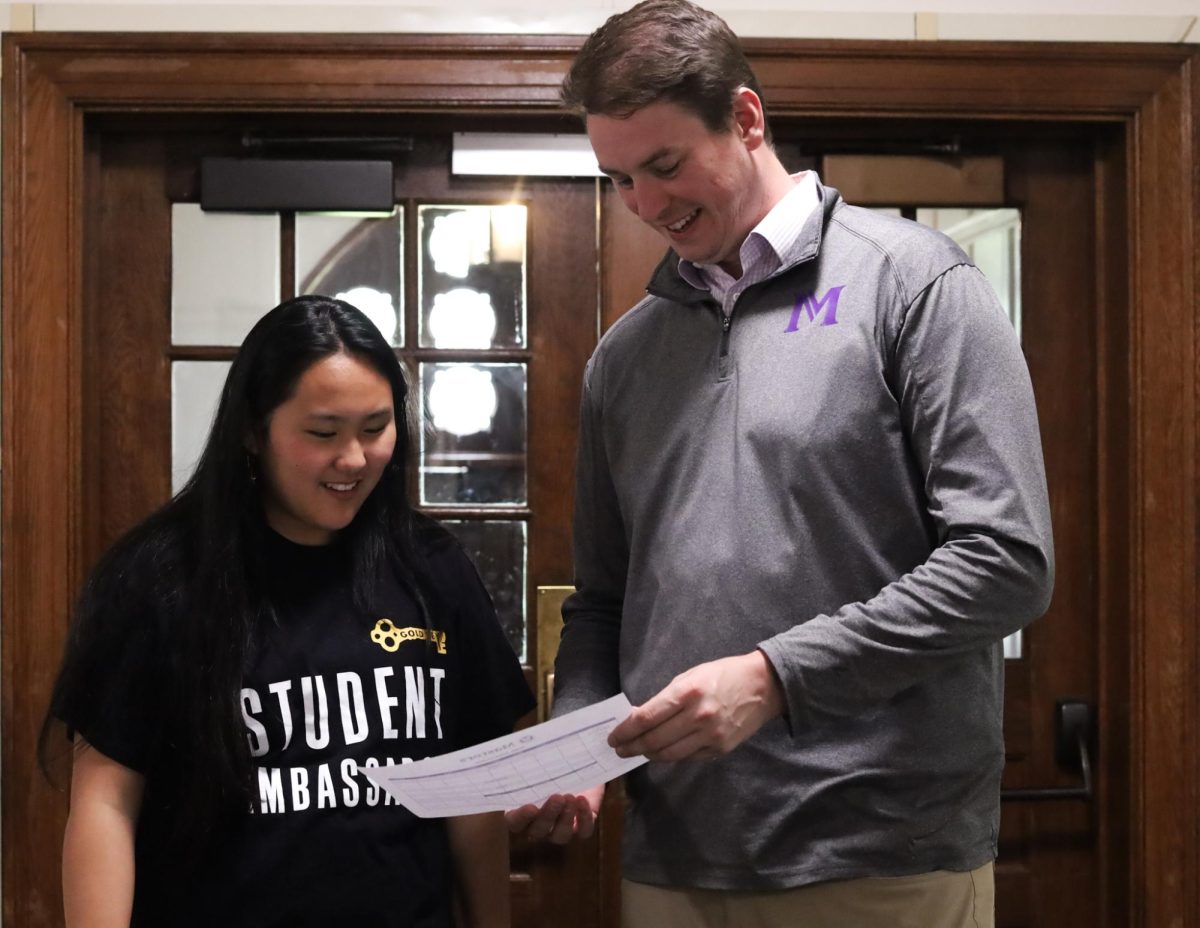
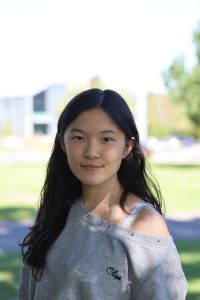

At the largest pre-college STEM competition, Regeneron International Science and Engineering Fair (ISEF), senior Nico Khoury-Levy and junior Siena Versaci won second place in Cellular and Molecular Biology category and fourth place in Behavioral and Social Science category respectively.
ISEF, held in Phoenix, Arizona this year, involves 1,800 students from around the globe to compete for award prizes totaling nine million dollars. It is not only an impactful event, but also extremely selective. Students across the world need to compete in their regional science fairs in order to get to ISEF. Overall, the advance rate is less than 1%.
The director of Masters science research program Kristina Gremski said, “At WESEF, the Regeneron Westchester Science and Engineering Fair, when Siena’s name was called, I actually screamed.” She continued, “I was in shock, just because only 20 finalists were chosen out of, I think, 827 projects, so that’s pretty low odds.”
Winning fourth place in the Behavioral and Social Science category, Versaci’s project coded and trained an AI model based on facial emotion recognition to support mental health diagnosis.
Versaci said, “There’s a lot of bias within the diagnosing process because of patient surveys and also clinician evaluations.” Patient self-reported surveys and clinical evaluations are both subjected to personal bias, especially under the stigma of mental illness.
Innovatively, Versaci trained her AI model using non-personally identifiable data, such as a segmented eye and eyebrow region. This circumvents the legal issues of using patient data and enlarges the dataset to train AI diagnosis models in the future.

Entered in the Cellular and Molecular Biology category, Khoury-Levy’s project tackles a paradox of T cells, a type of white blood cells of the immune system. In layman’s terms, T cells that are supposed to be in defense of the human body are too exhausted to kill their targets in a cancer tumor. But, on the other hand, in autoimmune diseases such as type 1 diabetes, they are too hyperactive to stop killing healthy cells.
Khoury-Levy worked in a lab of Regeneron Pharmaceuticals and created a mouse model where a cancer tumor is induced to a mouse with Type 1 diabetes. His results show that hyperactive T cells have an intrinsic mechanism that could be exploited to reenergize dysfunctional T cells in cancer.
Khoury-Levy said, “I’ve essentially developed or uncovered a new type of immunotherapy.” He continued, “It uses autoimmune diseases to cure cancer and cancer to cure autoimmune diseases”.
To compete in science fairs, students are encouraged to find a researcher as their mentor during sophomore year. Then, they devote hundreds of hours to work on a complete research project. Lastly, a poster and a research paper is finalized.
Versaci said, “I worked on it the majority of last summer and into this school year. My AI model and the segmentation model took around three or four months to code. Then each time I trained the model, and I trained it 10 times, it took 24 hours to run for each.”
Khoury-Levy said, “I started in June, and I’ve been continuing to work on the project up until ISEF competition day, getting more data, validating my results.”
The competitors in ISEF are evaluated through the judging process. They were asked to perform pitches of different lengths and then answer questions from a judge, usually a scientist in their respective category.
Versaci said, “I had some other judges who were really challenging, and they asked me very difficult questions, and really tried to see if I would break under the pressure.”
Gremski said, “When they’re at ISEF, they’re treated as scientists, so the judges speak to them as they would to scientists.”
ISEF is a huge event over six days. Aside from participating in the judging process, participants enjoyed a “fun day” at local landmarks, bonded with young scientists from all over the world, presented to local schools and had conference networking sessions.
Versaci said, “One night we went to Chase Field, and they had the whole field rented out. All of the kids were just running around playing sports, and they had bouncy castles, slides and they had a pitching machine.”
Khoury-Levy said, “For me, the award was just like a cherry on top. What I really got out of ISEF was the networking and the ability to put myself in a high-pressure situation and perform well under pressure.”