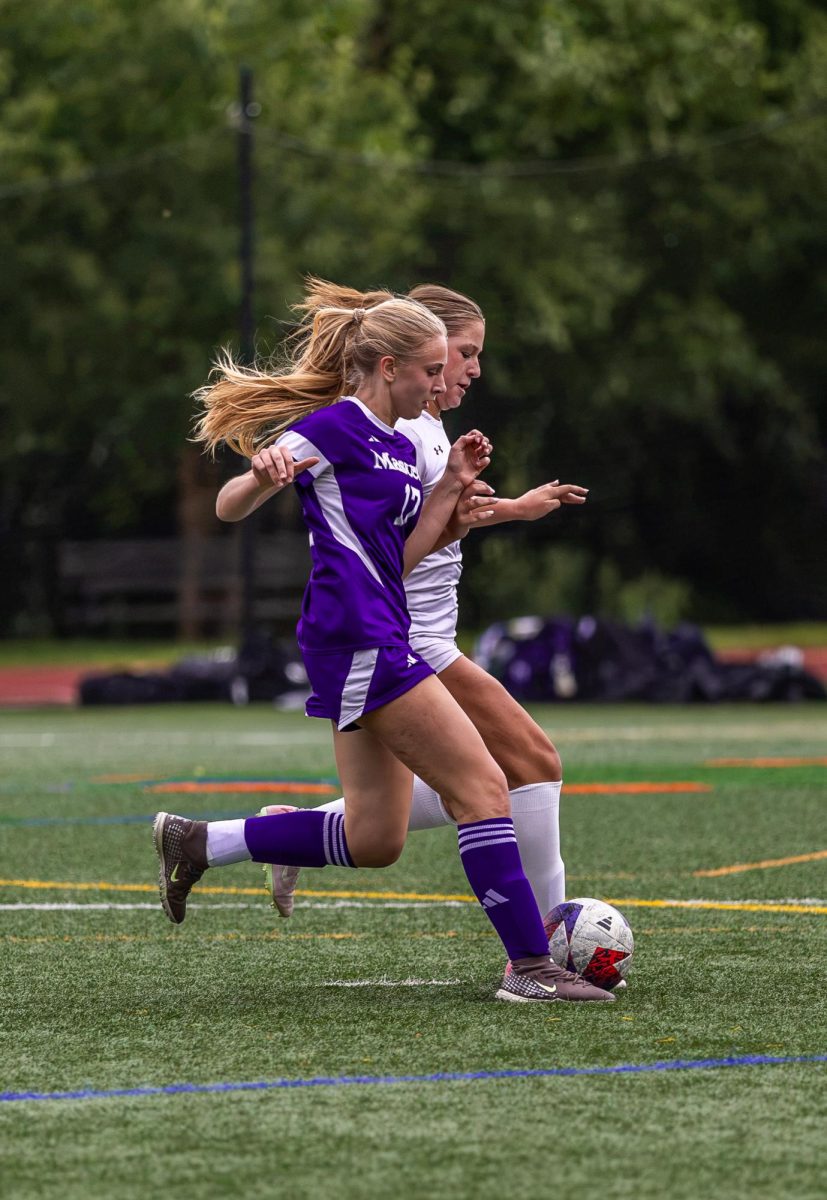



Sydney Sweeney’s recent ad for the betting platform Novig has caused female athletes and clubs like Girls Who Play to worry that years of progress towards including more women in sports might be unraveling.
In 1900, women made their debut in the Olympic Games, with only 22 female competitors. In 1996, women made up around 34% of the athletes at the Atlanta games, with a total of 3,512 female athletes . Just two years ago, at the Paris Olympics in 2024, women were 49% of the athletes competing with 5,306 female athletes. Those games, less than three years ago, were the closest the Olympics have come to an even split of female and male athletes.
Women have struggled to make their way into the sports world behind men, who led athletics for a while. From Katherine Switzer becoming the first female runner in the Boston Marathon in 1967, even with officials attempting to take her off the course, to 28 members of the U.S. Women’s national soccer team suing U.S. Soccer for equal pay to the U.S. men, women athletes have fought to prove themselves.
Sydney Sweeney, an American actress starring most recently in the Hulu series “Euphoria”, wrote a new narrative in her most recent ad with the betting platform Novig.
Novig’s goal with the ad was to emphasize that their betting platform is focused solely on sports – not wars, politics or other controversial topics. At the beginning of the ad, Sweeney repeats this claim, explaining that Novig thus wanted to show “just sports.” She continues to repeat the word “sports” as she plays a variety of them wearing nothing but sports equipment and balls. At one point, she lies on a pool table and admits, “You can’t trade this. I just look good here.”
Bea Hopper ‘27, a senior lacrosse player committed to Franklin and Marshall, said, “She just sexualized women in sports so much, and we’ve been trying to move away from that.”
As a track and field athlete, Aviana Kinon ‘29 has seen the stereotypes around women showing their bodies through controversy over smaller track suits. Sweeney herself reposted images of ESPN’s Body issue with professional athletes wearing no clothes.
“There’s nothing wrong with showing a woman’s body,” Kinon said. She added, “That’s their body doing the sports they love, not Sydney Sweeney acting like a kind of commodified version of the sports they’re betting on.”
After the ad, Novig raised their company’s value by 400%, increasing their company value from $500 million to $2 billion.
The success comes with immense backlash from female athletes. Australian swimmer Ariane Titmus, British sprinter Amy Hunt, Australian boxer Skye Nicholson and U.S. gymnast Gracie Kramer are just a few of the female athletes who have taken to social media to express their frustration. Many focused on making new claims about the real values and hard work at play in female sports.
Kinon created the Girls Who Play club at Masters to discuss issues of female athlete representation and stereotypes. “It’s really important that there are spaces where people can come and be athletes and just athletes–not women athletes,” she explained.
Kinon hopes, in the future, that female athletes will be “praised for their accomplishments instead of just other factors.”
In the meantime, Kinon explained that Girls Who Play will continue to lead the Masters female athlete community in supporting each other. The group hopes to put together a female-identifying athlete dodgeball game, as well as a handbook for female athletes.
Hopper said, “It sucks that we have to prove it, but [we need] to prove to everyone that we’re not just a pretty looking girl.”
Kayla Hanley, varsity girls soccer and girls basketball coach at Masters, expressed frustration over the ad, yet she still believes in the improvement she’s seen in women’s sports.
“I’ve been in the progression and incline of women’s sports as a player and as a coach,” Hanley said. “It’s going to take time, but we’re getting there.”