


People erased from the past are just as easily erased from the present. Enduring through cultural genocide, forced assimilation, mistreatment, and relocation, Native Americans are still here today and thriving. Their history is America’s history, behind the whitewashed violence and stereotypical depictions our own country created.
During Spring Break, I went on a school trip to Kansas and Oklahoma to more deeply understand Native American history, resilience and pride. I connected closely with many tribal members to listen to their stories – stories that are continuously silenced.
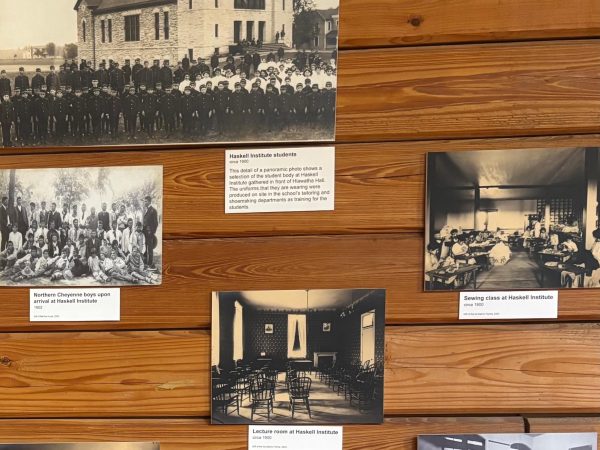
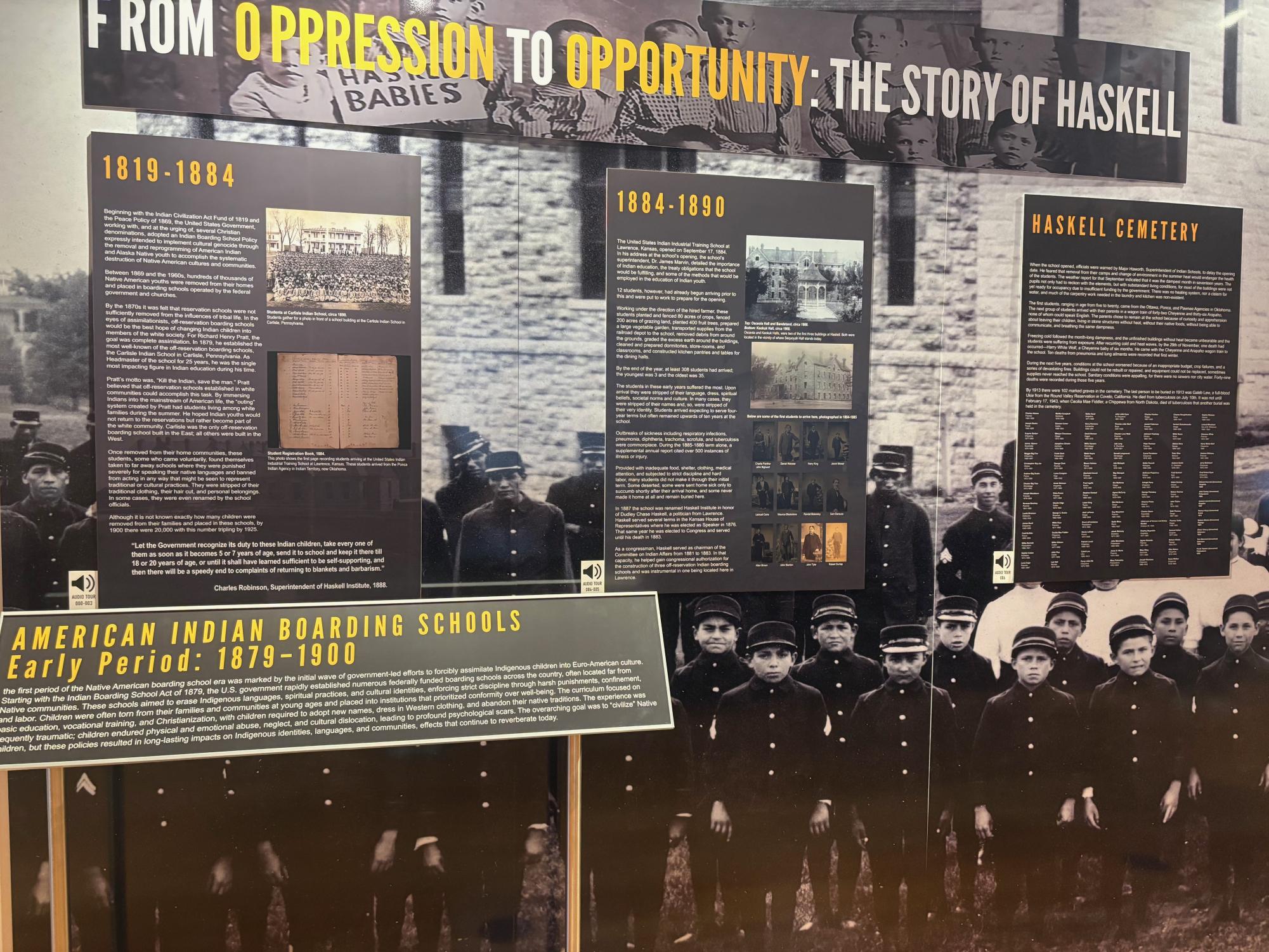
During visits to Haskell, Kansas, and the Haskell Cultural Center and Museum, my peers and I were confronted with painful realities that are left out of our history textbooks.
This is nothing new to Native Americans, but a majority of people, including myself before this trip, have never heard of it. I find myself fortunate to have learned a portion of Indigenous history in the United States, but I needed to search for it because our own government has hidden the very people who founded this land.
Lori Hasselman is a citizen of the Shawnee Tribe and the Delaware Tribe of Indians and an alumna of Haskell Indian Nations University. She serves as the Director of Sovereign Partnerships and Indigenous Initiatives at the University of Kansas, and met with us on our trip.
“You are non-Native, but you don’t know about any of this stuff because you don’t learn it in school. At this time in the world, we need our allies. We need people who can stand up and talk because they [the federal government] aren’t listening to us,” Hassleman said.
She continued, “They need someone to dance at their events. They need someone to say, ‘Here’s what our culture is’ because a large portion don’t have a good sense of what their culture is.”
Every time Indigenous peoples in the United States advocate for more historically accurate tellings of history, they are usually met with people who say that Americans should have pride in the country’s history without needing to feel bad.
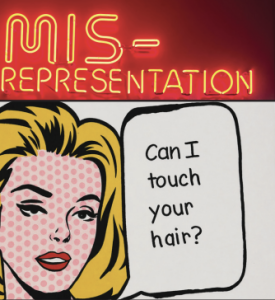
These types of responses display the lack of understanding of the role that Indigenous people have had in American history.
I argue that if people took a second to learn a little bit about Native Americans’ perspectives on history, it wouldn’t just combat the myths that have been built to reshape American history, but also shift the focus towards vibrant Native communities with admirable pride and resilience.
Maya Streicher, a junior at the Masters School, attended this trip to gain a first-hand account of Native Americans’ side of history and day-to-day life.
“Something that was surprising to me is how much pride Native Americans have in their culture. I really liked how everyone we met was so proud to talk about what tribes they are from and their traditions,” Streicher said.
She continued, “When we went to the library at Haskell, the high school co-chair sang all of us a prayer in the library, and not a single person in the library turned their head. It’s so interesting to witness how happy and proud they are to be there. Expressing yourself is really part of your everyday life, and nobody bats an eye when you are being who you are.”
The Editor in Chief of Haskell University’s school newspaper, Tara Roanhorse said, “Whenever people think of Indigenous people, they think of old Western movies, or images of people with headdresses. But modern Indians are not like that. We’re still here. We’re still fighting. Natives are everywhere, you just have to look for them.”