


After suffering a spinal cord injury that left him paralyzed from the neck down, data researcher Galen Buckwalter became a participant in a Brain-Computer Interface (BCI) Study with Caltech to help advance technology and aid fellow paraplegics. He’s also embarked on a legal crusade that has raised an interesting question: should he have the right to access his own brain data?
In January of 2024, Buckwalter underwent a craniotomy and was implanted with 384 microelectrodes forming his BCI.
Then the study began. Buckwalter said that during sessions his brain signals and data are “all decoded and turned into control signals for digital manipulation.”
Through this manipulation, “I can move a robotic arm just by thinking about it, and I can move all the digits,” he said.
“They also stimulate, so it’s not just reading my brain activity as I think about doing different things. They can also stimulate, which produces sensation.” He continued, “They are trying to better understand how stimulated sensations are compared to actual tactile sensations.”
As the study progressed, Buckwalter began to think of other applications for his BCI. In his free time, he and his band wanted to use his brain waves to compose music. “I wanted to see if I could directly use my neuronal activity to make tones that I could control, and we’ve actually been able to do that, which is very trippy,” he said.
He added, “I think about moving my toe, and I can make a tone go up, so, now, I am trying to put all that together because I have control over a lot of channels, and it’s kind of like I have this orchestra in my head.”
However, when Buckwalter asked Caltech for access to his brain data to make his music, they refused.
“I was recording with a friend of mine, and I was like, ‘This would sound great on this song that we were doing…And so I asked Caltech for a copy of what we had produced from my brain, and they said, ‘No, you can’t have it, it’s not yours’,” Buckwalter said.
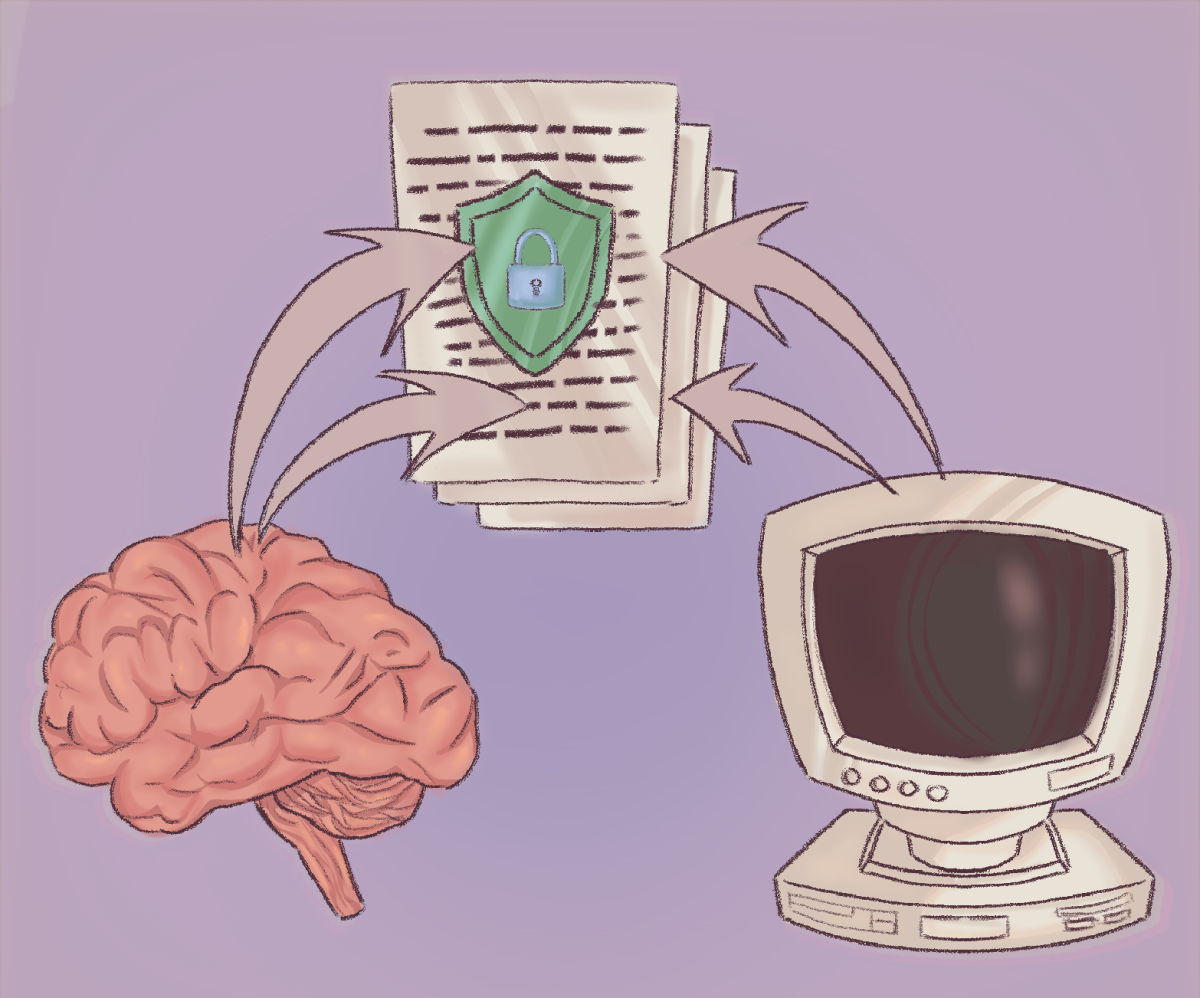
When Buckwalter referred back to the consent forms he had signed, he realized that he had signed away his rights to his brain data. When Upper School history & religion teacher and lawyer Benjamin Thorn started exploring the advances to neuro technology, he noticed the potential privacy risks. He said, “From a gut perspective, we think our brain is our inner citadel. It is the most sensitive, and our thought information we have, our thoughts.”
Seeing his dilemma, Buckwalter tried to leverage his position. Caltech wanted to extend the study to 10 years rather than eight.. “Instead of signing it, I wrote up a list of what I hoped to happen, including things like more transparency with what they were doing with my data,” Buckwalter said.
After Caltech received his new Bill of Rights, they came back with a more stringent consent form. In essence, they said no. “ They’re saying the quiet parts out loud, and they do explicitly own this, that they don’t need to tell me what they’re doing and that I have no ability to engage in any other research,” Buckwalter said.
He continued, “If I don’t sign this new consent form, I’ll be basically kicked out of the study, which means that I have to get a massive surgical procedure. They do a full craniotomy where they take half of my skull. Consent is supposed to be voluntary, but yet, here, if I don’t consent, I have to go get the BCI taken out. How can that be voluntary consent?”
After hearing about Buckwalter’s predicament Thorn evaluated it from a legal perspective. He said, “A provision that was requiring you to have surgery to repossess something from your body seems against public policy.”
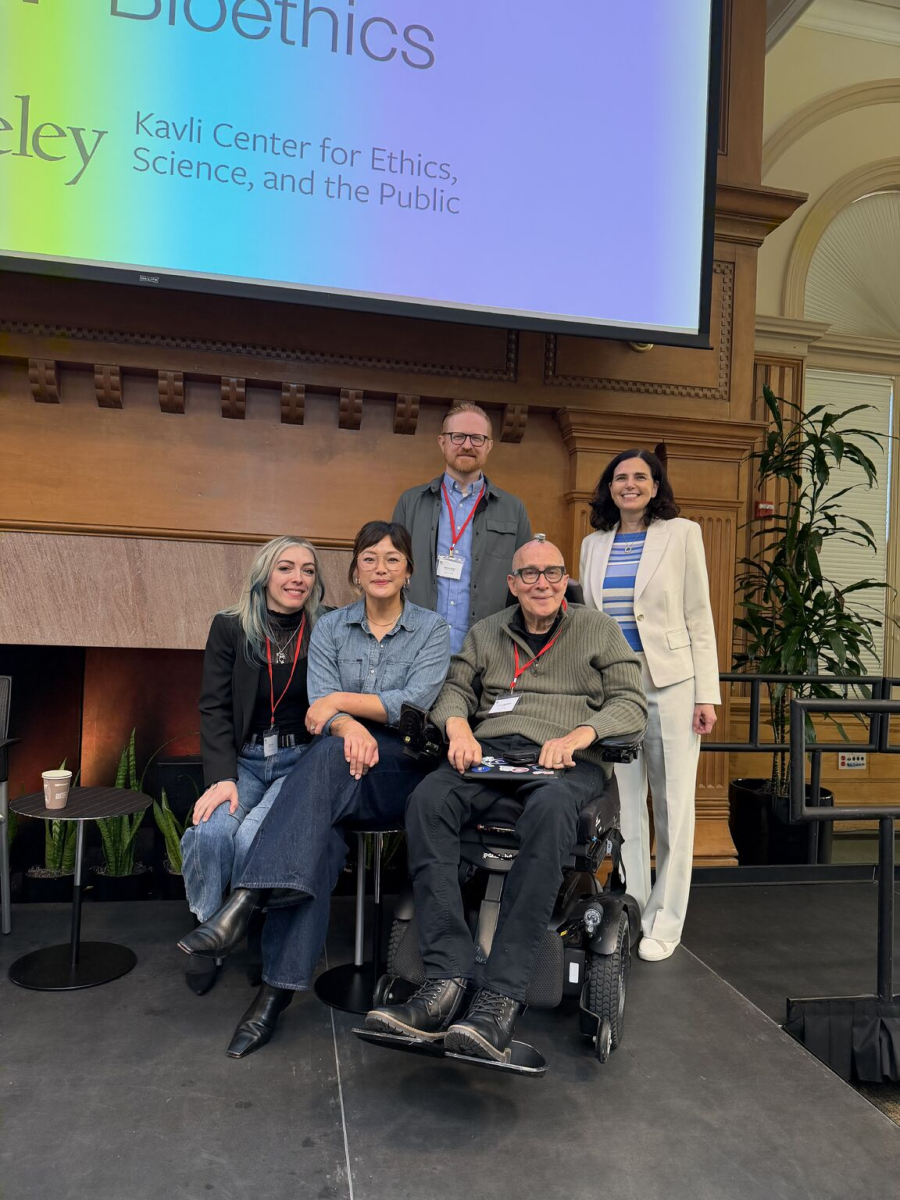
Overall, Buckwalter wants to expand the research on BCIs to help glean its possible healthcare applications. “I’m not anti-research. I’m pro research. If anything, I want to be moving faster than just Caltech. That’s why I’d love to be able to work with other research groups,” he said. Buckwalter said, “If we can get regulation on the books, about absolute privacy, and absolute ownership we can build ways to keep them safe.”
He continued, “I think hopefully we are more systematic about our approach to this, and come up with some moral and ethical frameworks that we can agree on. But if we don’t do it soon, they’re gonna be snagging all the data and using it to manipulate us.”
“If we’re breaking our brain, we’re breaking our humanity. I just don’t see any way to rein that in other than having laws with teeth,” Buckwalter said.