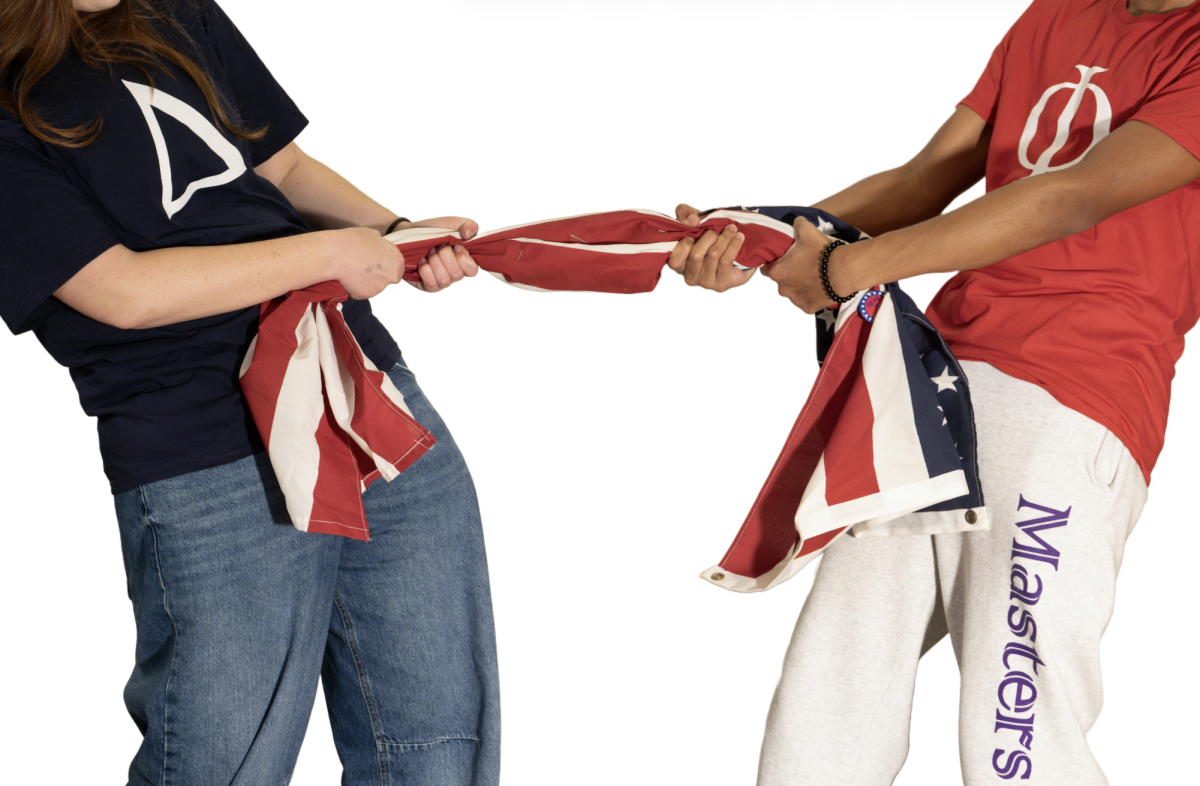
Immigration is an increasingly relevant issue in Westchester County, the home for many of The Masters School’s students and faculty. In 2025, local organizations in Westchester donated food and supplies to asylum seekers settling in Ardsley, and in January 2026 the Masters community participated in a walkout protesting the increased violence of Immigration Customs Enforcement (ICE).
These local, public examples of immigrant support represent the majority of viewpoints within the Masters community on issues such as border enforcement spending or the status of long-term undocumented residents.
In a recent poll conducted at Masters, data shows that 56.5% of students, faculty and staff who responded to the survey at the School believe border enforcement spending should be decreased. However, there is a significant difference between faculty and students’ opinions on border enforcement. 69.1% of faculty and 52.1% of students chose decreased border security spending, which means that students were more likely than faculty to select the other options: that border enforcement spending should be kept the same or increased.
Similarly, with regard to which policy the U.S. government should hold for undocumented immigrants in the U.S. who have not committed serious crimes, 73.4% of respondents, students and faculty, believe undocumented immigrants should be provided a pathway to legal status or citizenship. Yet, 69.4% of students, in comparison to 84% of faculty, chose this option, also demonstrating that students were more likely than faculty to select that undocumented immigrants should be given temporary work status without a pathway to citizenship or deported to their origin countries.
However, the data should not discount the fact that the majority of student respondents said that border enforcement spending should be decreased and that undocumented immigrants should be given a pathway to citizenship, or that students’ opinions on politics at Masters lean liberally overall.
Students in the Political Science class were asked to take a quiz, created by Pew Research, to determine where they fit in the spectrum of political typology. Once all students had taken the quiz, they found that the majority of the class fell into the category of leftward progressives. In comparison, only 7% of respondents nationwide aligned with that category.
A student in Political Science, Sam Friedman ‘27, said the quiz results reflected the students’ overall political view on how the government should run, a topic explored during class discussions. Yet, she said she believes that students differ in their opinions on specific issues.
Friedman said, “I think that we have general things that we agree upon, like some things that Trump is doing are terrible and that the government should be a certain way, but I think when it comes to individual issues, I might not feel the same way about stuff in foreign relations or taxes or as someone else might.”
She continued, “Sometimes [class] is a place where I feel like I wouldn’t be able to say that opinion if not a lot of people have it because, I know of course we’re seniors, and we know how to have Harkness discussions and disagree respectfully. But I think [class] is a place where, if you don’t have that main opinion, it’s not really like a good [place] to say ‘I don’t agree with you guys.’”
According to research on generational trends conducted by the Pew Research Center, younger generations lean more liberal than older generations.
Friedman said she believes young adults lean more liberal because they are more insistent on making change than older adults.
She said, “I think we care a lot more about things because we have so many feelings and we have so many thoughts, and everything feels so urgent. So that’s why [young] people tend to lean more liberal because they want change. Because conservative [means] going back to the way things were once upon a time and [being] liberal means making changes to our current government.”
However, the percentage of students versus faculty who chose the more liberal approach for the questions dealing with immigration issues reveals that faculty and staff lean more liberally than students. As reported by the Pew Research Center, the liberal political perspective promotes creating pathways for legal status for undocumented people, and the conservative viewpoint supports increases in border security.
Colleen Roche, an upper school history teacher and the teacher of the Political Science class, discusses the differing political perspectives of older and younger generations within the course. Although she said younger people are typically more liberal, she said their political view also depends on their location.
Roche said, “I have friends who moved from New York to Texas with their teenage kids, and living in Texas gave their teenagers a different point of view. One hardened more into a liberal, and the other got a little more conservative.”
However, Masters tends to be a predominantly liberal environment. Roche said that while teaching political science for many years, she has noticed that the majority of her students have had more left-leaning views.
The results of the poll, which showed faculty choosing more left-leaning answers for questions related to immigration, could be attributed to the fact that there were significantly fewer faculty and staff who answered the poll than students: 81 faculty members responded to the survey as compared to 221 students. Given that there are 147 faculty members who were sent the survey, the margin of error for faculty responses is +/- 7.8 percent.
The results can also indicate that the method in which individuals obtain their news about national issues and policies may influence individuals’ perspective on such topics. In the poll, the majority of students said they receive their news from discussions with family, friends or teachers, and also from social media. In contrast, faculty and staff said they mostly learn the news from reading news websites, digital newspapers or newsletters and also listening to podcasts or radio.