


I have a caffeine problem. So much so that I carry caffeine pouches in my bag just in case I can’t get a cup. I rely on the guarantee that no matter where I am, I’ll have the energy, no searing migraine and the feeling I’m so used to – and I’m not alone. Across Gen Z, that reliance is increasingly common, and increasingly “aesthetic.”
Carefully crafted lattes and “study with me” TikToks are turning caffeine into an identity. Influencers like Emma Chamberlain, founder of Chamberlain Coffee, helped popularize the idea of coffee as a personality trait. Chains like Blank Street Coffee push that further, because the drink functions as a sort of accessory to be photographed and documented online. Even fictional references, like the fast-talking coffee-fueled characters of Gilmore Girls, reinforce the idea that constant caffeine consumption is quirky and aspirational.
Now, that image resonates in arenas outside of coffee itself. Energy drinks and matcha have surged in popularity, especially over the past year. Companies like Starbucks are leaning into the trend, introducing high-caffeine Energy Refreshers on Apr. 6 and Iced Energy Drinks in 2024.
Clio Foley ‘26 remembers the initial aesthetic pull of coffee clearly. “I started drinking it when I was probably 14,” she said. “At first, it was because I thought it was aesthetic and cool. And then I just started drinking it every day, and eventually I wasn’t really able to stop.”
Foley believes coffee signals something about identity. “I do think it says something about your personality based on the kind of coffee you order.” She pointed to the presentation as part of the appeal. “You like the coffee more if it’s in a cute cup,” she said.
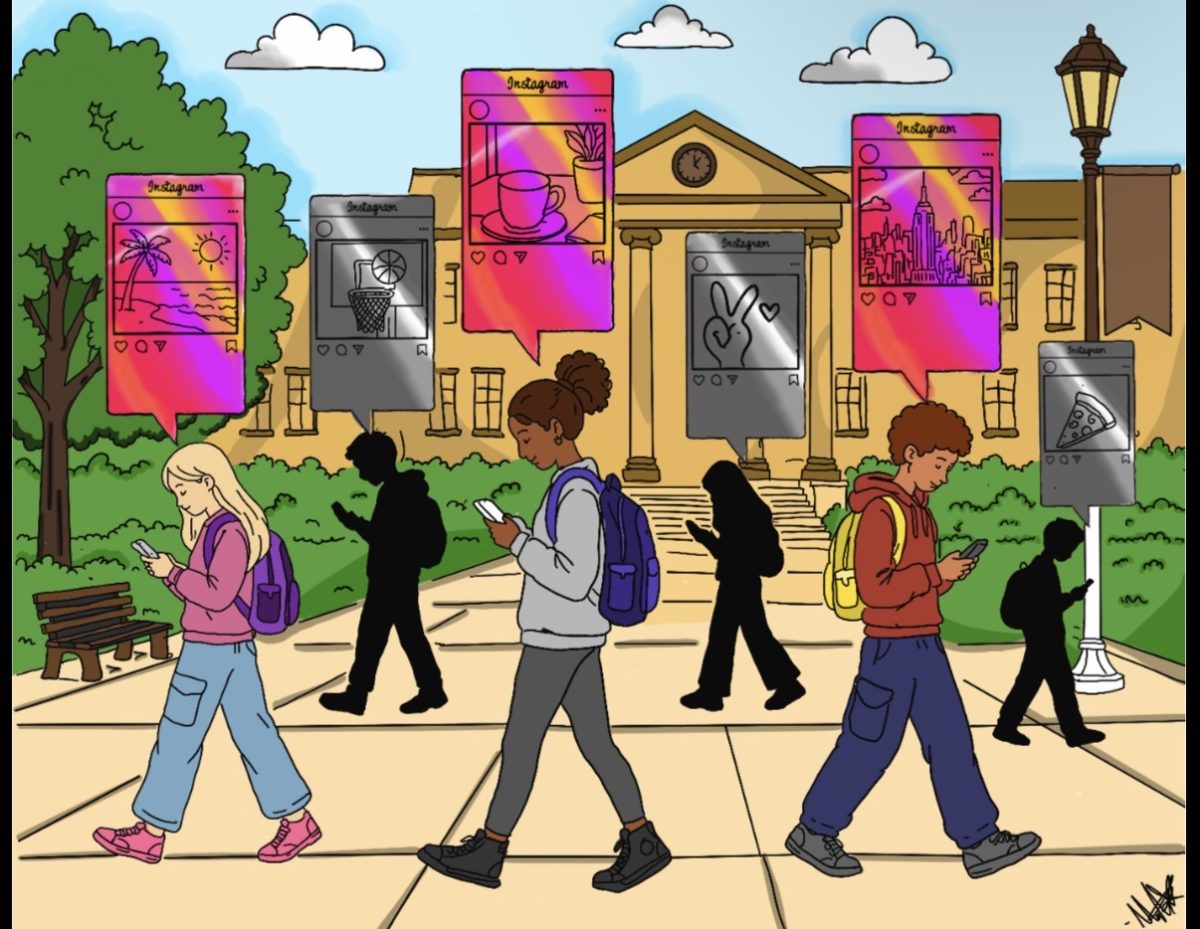
Platforms like TikTok and Instagram play a major role in the aestheticization of coffee. A centuries-long morning habit is now a ritual worth documenting and spending large sums on. Foley said, “Going to a cute cafe and spending like nine dollars on a latte is very normalized. Those platforms encourage you to drink fancy coffee and make it part of your routine.”
However, behind the aesthetic lies a contradiction.
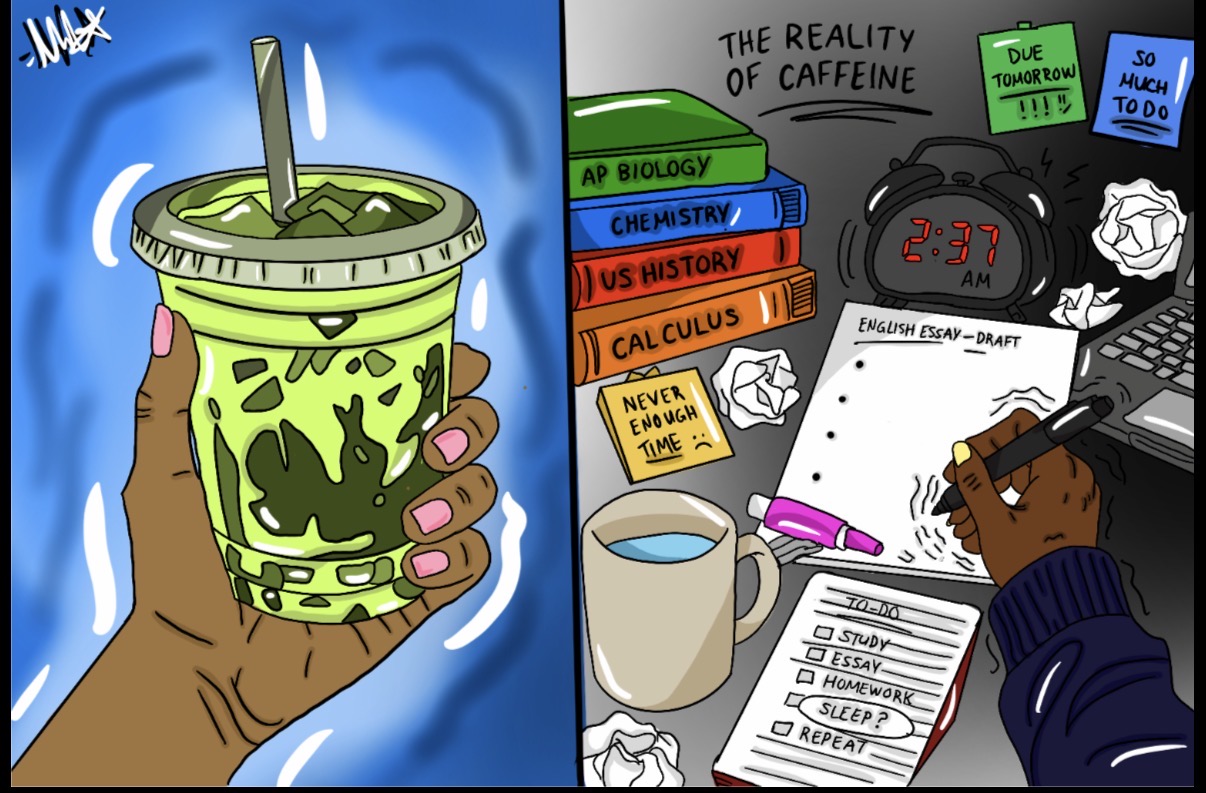
Gen Z is often described as the most mental health-aware generation, more open about anxiety, burnout and emotional well-being than those before it. Still, caffeine, a stimulant known to exacerbate those issues, is embedded in daily routines.
Caffeine is the most widely used psychoactive substance in the world, according to the Centre for Addiction and Mental Health. Its normalization makes it easy for consumption to slip into excess, particularly for teenagers. The American Academy of Pediatrics recommends that adolescents consume no more than 100 milligrams of caffeine per day, roughly one small cup of coffee. Many popular drinks like Celsius, which contains 200mg of caffeine, far exceed that amount.
Foley has noticed the effects in her own life, especially with going to sleep later. Social media, she added, can make that pattern feel acceptable. “You see people drinking coffee at four or five p.m., and it makes you feel like you can too.”
Even when the physical effects are subtle, the psychological dependence on caffeine can be harder to ignore. “If I skip it for a day, I just feel groggy and not as clear-headed,” Foley said.
Similarly, caffeine also started early for Jack Sobolewski ‘27. “I regularly started drinking coffee when I was 12 in seventh grade because I was working professionally as a child actor, so I had really long days and had to get up early,” he said.
Sobolewski finds caffeine important to how he functions. “I regularly started drinking coffee when I was 12 in seventh grade because I was working professionally as a child actor so I had really long days and had to get up early,” he said.
Unlike many of his peers, social media does not affect his choices. “Social media doesn’t really influence what I get,” he said. He also draws a line at certain products. “I hate energy drinks. I will never drink an energy drink willingly.”
However, coffee is still routine. “I don’t remember the last day I didn’t have an iced coffee,” Sobolewski said.
Caffeine is a constant presence in the daily routines of many Gen Z students, appearing in the first hours of the day and continuing through them.