
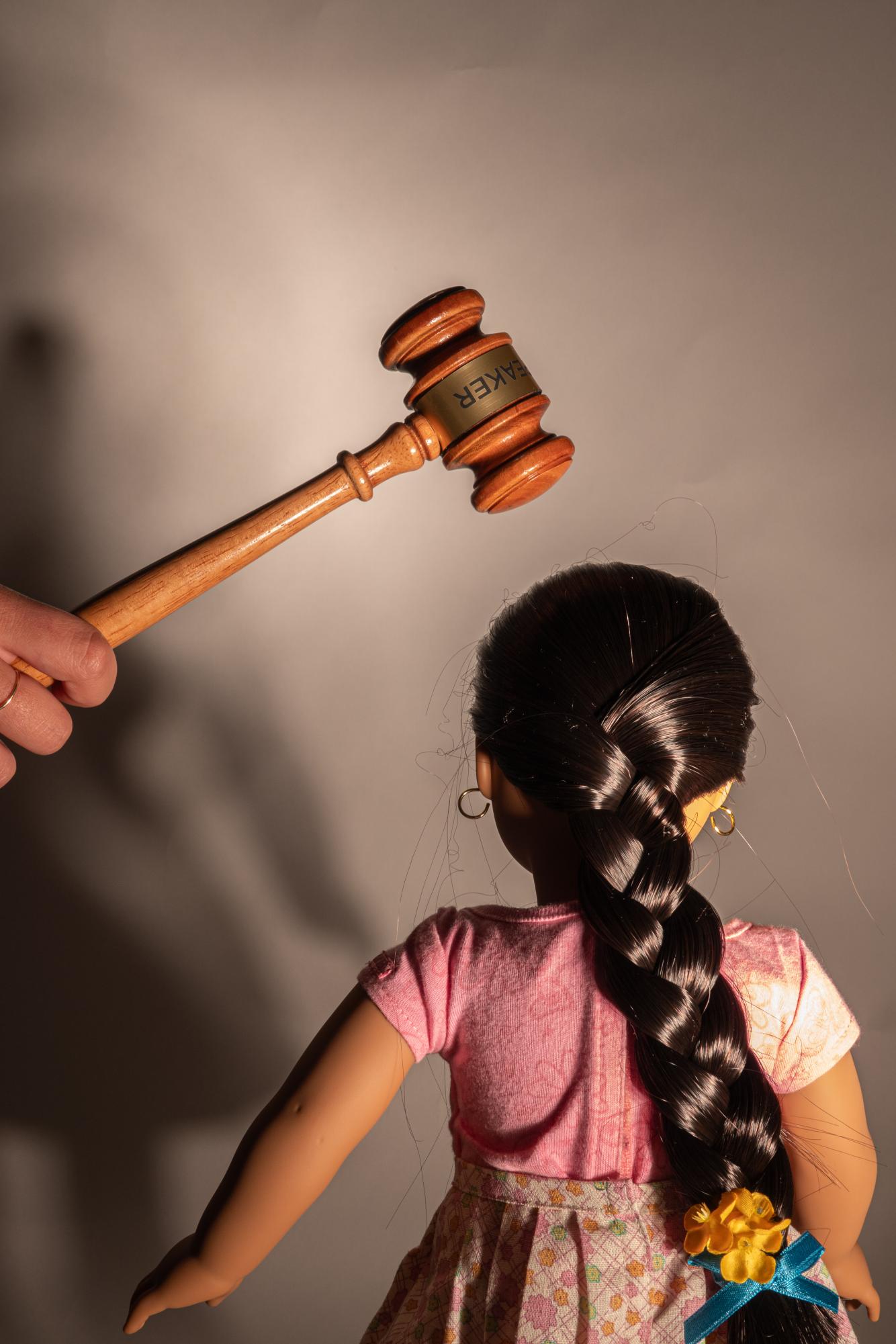
Over 150 years ago, the ratification of the 14th Amendment granted citizenship to all individuals born in the United States, but that precedent may now be at risk.
In January 2025, President Donald Trump issued Executive Order 14160, ordering federal agencies to stop granting citizenship to children born in the U.S. to parents who are not lawful permanent residents or citizens. The Supreme Court is currently debating the order’s constitutionality in the case Trump v. Barbara.
“Barbara,” a pseudonym for a Honduran woman seeking asylum, is the plaintiff. After learning she was pregnant in February 2025, she sued the administration, arguing that her child should have access to legal work and education. While public schools are required to educate all children regardless of immigration status, the removal of birthright citizenship raises broader concerns about how easily families can access those rights.
Barriers already exist. Language differences often complicate immigrant families’ ability to navigate school systems, particularly in special education. Claire Bellin, a bilingual social worker in New York City Public Schools (NYCPS), works with families (about 40% of whom primarily speak Spanish) to help them understand their rights and consent to evaluations.
Bellin said translation issues are common. Documents are sometimes poorly translated or not translated at all, and interpreters are not always available.
She said, “Parents often don’t have the confidence to demand their rights. I’ve heard many parents from different public schools tell me they were told there’s no translator available when they want to communicate with teachers about a child’s progress and behavior.”
She continued, “There are other general barriers, [such as] when parents haven’t had the opportunity to become fully literate in the language they speak, so reading a long document in the language they speak could be really cumbersome or impossible sometimes.”
Besides logistical barriers, fear plays a significant role.
Gabriela Bermudez ‘28, a member of the Students of Color Empowering Excellence Through Mentorship (SCEEM) club, said the loss of citizenship protections could create widespread anxiety. Families may feel pressured to live more cautiously or avoid institutions altogether.
“[Not having citizenship] could instill a lot of fear within the families who have to experience that. They might have to do stuff illegally, or have that feeling to hide all the time and not be able to live in a safe environment,” she said.
Similarly, Bellin believes children whose lives are disrupted by being removed from school because of their undocumented status could affect them psychologically.
She said, “I would definitely say that in addition to lost opportunities for learning, literacy and numeracy, I would predict poorer mental health outcomes [for those undocumented children].”
Upper School history teacher Eric Shapiro, who teaches AP U.S. History, said there are similarities between the Supreme Court case Trump v. Barbara and Roe v. Wade, since both are cases related to the 14th Amendment.
However, Supreme Court justices in Roe v. Wade expanded individuals rights by discovering an implied right that was not explicitly stated in the Amendment, the right to privacy, in order to pass the court case, while Executive Order 14160 limits individuals rights by restricting the Citizenship Clause in the 14th Amendment to children of U.S. citizens.
Shapiro said, “[Roe v. Wade found] a right that was sort of in the 14th Amendment: a right to privacy. The 14th Amendment doesn’t say right to privacy, but the justices found that. And so that right then existed, according to the Supreme Court, up until two years ago, when it was overruled. If this right to citizenship based on birth were taken away, that would be another example of taking rights away.”
The Supreme Court’s decision on the constitutionality of Trump v. Barbara could shape how birthright citizenship is defined in the U.S. For educators and families, the court’s decision may also affect access to services, language barriers and students’ daily experiences in school.